
Most searches for what QA in IT is lead to definitions that cover what QA in engineering means, what a QA engineer does, how much QA in software testing pays, what skills you need, what the full form stands for, how QA differs from QC in manufacturing or medical contexts, what types of QA testing exist, how to do QA testing for beginners, what the QA process steps are, and how QA fits in agile or DevOps environments.
That's useful background, but it skips the part every engineering team needs: whether your current QA setup can keep up with release cadence without burning senior IC time every sprint. A regression suite that covers your app today may leave real exposure two releases from now if no one is maintaining it, and deciding whether your team owns that maintenance or the agent does is the question that determines how much capacity you have left for building. Minitap is a fully autonomous QA agent that handles test authorship, execution, and maintenance automatically, so that capacity stays with your engineers.
TLDR:
- QA (Quality Assurance) in IT catches defects during development before they reach users.
- A bug caught in testing costs nothing; the same bug in production can drop App Store rankings within 48 hours.
- QA runs parallel to development in agile teams, not as a gate at the end of sprints.
- Automation depth and mobile specialization drive QA engineer salaries higher than manual testing skills alone.
- Minitap is a fully autonomous QA agent that adapts to UI changes without your team maintaining test scripts.
What Is QA in IT? (Definition and Full Form)
QA in IT stands for Quality Assurance. It refers to the systematic process of verifying that software meets defined standards before it reaches users.
In practice, QA activities include writing test cases from feature specs before development starts, logging defects with enough reproduction detail for developers to act on without back-and-forth, and running regression suites after each release to confirm prior functionality still holds. These activities target different stages of the development cycle, which is why QA is a discipline built into the workflow, not a single checkpoint.
The QA full form in testing contexts carries a specific meaning: a structured discipline that catches defects, inconsistencies, and functional failures during development before they reach release. A checkout crash caught in a test environment costs nothing. The same crash reaching production can wipe out a day of revenue, trigger a wave of 1-star reviews, and drop your App Store ranking often within days.
QA vs. QC: A Quick Distinction
These two terms get used interchangeably, but they describe different things.
- QA (Quality Assurance) focuses on process. It prevents defects by building checks into the development workflow before code ships.
- QC (Quality Control) focuses on the product. It involves inspecting the output after it's built to identify what's already broken.
The QC full form in manufacturing and the QC full form in medical contexts both follow this same logic: inspect the finished output against a standard. In software, QA operates earlier in the cycle, making it a more cost-effective place to catch problems.
The Role of QA in Software Development
QA sits at the intersection of process and product integrity. It's the ongoing practice of checking that software behaves the way it's supposed to before users encounter it in the wild.
In mobile engineering, QA covers a wide surface: functional flows and regression testing across releases.
Where QA Fits in the Development Lifecycle
QA is not a gate at the end of a sprint. In teams running agile delivery cycles, it runs in parallel with development.
- Testers write test cases alongside feature specs, so coverage gaps are caught before code ships.
- Automated regression suites run on every pull request, catching breakage before it reaches staging.
- Exploratory sessions happen after each release candidate, targeting edge cases automation misses.
This keeps defect discovery close to the point of introduction, where fixing it is cheapest.
Types of QA Testing in Software Development
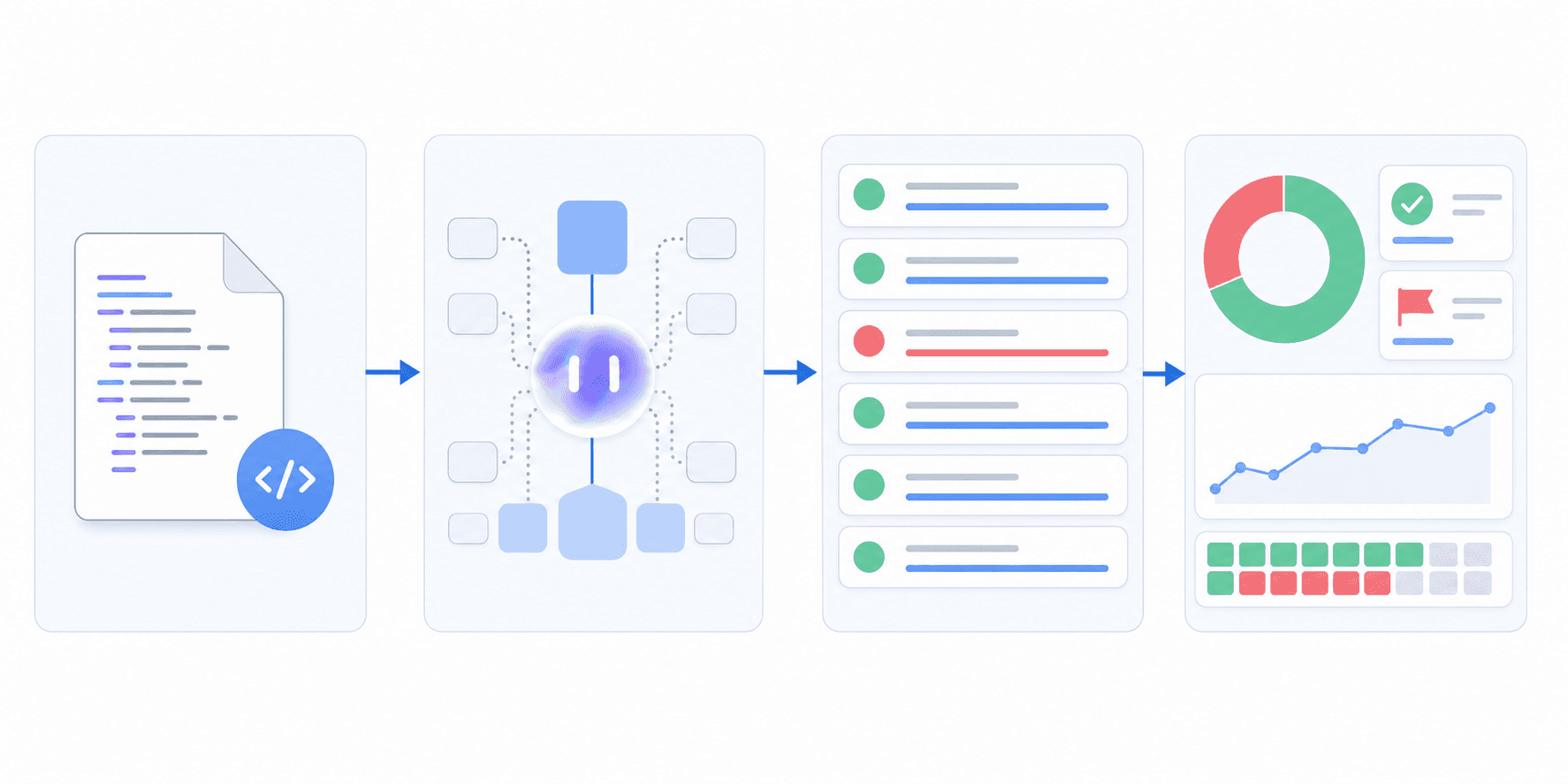
Most teams use the word "testing" as if it describes one thing. It describes at least six distinct activities, each targeting a different failure mode.
| Test Type | What It Checks |
|---|---|
| Functional testing | Does each feature do what the spec says it should? |
| Integration testing | Do separate modules pass data correctly between each other? |
| System testing | Does the full application behave correctly end to end? |
| Performance testing | Does the app stay stable under load, low memory, or slow networks? |
| Regression testing | Did the latest release break anything that was working before? |
| User acceptance testing (UAT) | Does the product meet real user expectations before it ships? |
For mobile teams, regression testing tends to consume the most time. Every release touches shared components, and verifying that nothing broke across prior flows is the work that scales poorly when done manually.
Manual vs Automated QA Testing
Manual testing means a human runs through flows, taps through screens, and judges whether the app behaves correctly. It does not scale. Running the same smoke suite before every release consumes hours of senior engineering time that should be going toward building.
Automated testing executes predefined flows without human input. It scales across devices and runs on every build, but your team writes and maintains the scripts. When the UI changes, the tests break. Someone has to fix them before coverage is restored, and that work lands back on your engineers.
Both approaches carry a cost that compounds over time. The question is whether your team absorbs that cost or removes it entirely. Minitap is a fully autonomous QA agent that handles test authorship, execution, and maintenance automatically, so neither cost lands on your engineers.
QA Engineer Skills and Qualifications
QA engineers draw from two distinct skill sets, and the gap between them is where most hiring decisions actually happen.
Technical skills hiring managers look for:
- Programming basics in Python, Java, or JavaScript to write and maintain test scripts
- SQL for querying test databases and validating data flows end to end
- Familiarity with automation frameworks like Selenium or Appium
- Understanding of testing methodologies including black-box, white-box, and exploratory approaches
- Version control with Git and working knowledge of CI/CD pipeline fundamentals
Soft skills that separate good QA engineers from great ones:
- Analytical thinking to trace failure paths back to root cause instead of stopping at surface symptoms
- Clear written communication, particularly when writing bug reports developers will act on without back-and-forth
- Attention to detail across long regression cycles without losing focus on lower-priority test cases
- Problem-solving instincts when a test result does not match any expected failure mode
Neither list alone is sufficient. A QA engineer who can write automation scripts but cannot communicate a severity assessment clearly will create friction at every sprint review.
QA Engineer Salary and Job Market (2026)
Salaries vary meaningfully by seniority, specialization, and geography, but the overall market for QA engineers in software and mobile is strong heading into 2026.
Compensation Ranges by Level
Based on data from sources including Glassdoor and LinkedIn Salary (June 2026), entry-level QA roles typically start between $55,000 and $75,000 annually in the US. Mid-level engineers with two to four years of experience and hands-on automation skills generally land between $85,000 and $110,000. Senior QA engineers and leads, particularly those with mobile-specific experience in iOS or Android test infrastructure, commonly see total compensation ranging from $120,000 to $160,000 at mid-to-large companies.
What Drives Pay Up
A few factors consistently move QA salaries toward the higher end of each band:
- Automation depth matters more than manual testing volume. Engineers who can write and maintain test frameworks beyond executing test plans command a clear premium.
- Mobile specialization adds value. QA engineers who understand device fragmentation, OS-level behavior, and app lifecycle edge cases are harder to hire than generalist testers.
- CI/CD integration experience is increasingly expected at senior levels. Engineers who can own the pipeline from authorship through deployment, are in higher demand.
Job Market Outlook
Demand for QA roles in mobile engineering remains steady. The shift toward faster release cadences in agile environments has made continuous testing a baseline expectation instead of a nice-to-have, which keeps headcount needs relatively stable even as some teams supplement manual work with automation tooling.
How to Become a QA Engineer
Most QA engineers start from one of three places: a computer science or software engineering degree, an IT background, or a transition from development, business analysis, or technical support.
Certifications and Credentials
Certifications move candidates faster in this field than in most others. The ISTQB Foundation Level is the most recognized entry credential and typically requires 30 to 40 hours of study to prepare for. CSTE and CSQA are worth pursuing mid-career, since both require documented experience hours to qualify.
Practical experience matters most. Build a test suite against an open-source project using Selenium or Appium, document what you found and what it revealed, and apply to roles with manual regression responsibilities. The cert gets your resume through the first filter; a working portfolio shows you can actually execute.
QA Testing Process and Best Practices
A repeatable QA process matters more than any single tool or technique. The steps below reflect how many mobile engineering teams structure their testing work.
Common Steps in a QA Process
There are several stages most teams move through, though the order and emphasis shift depending on release cadence and team size:
- Requirement review: QA gets involved before a line of code is written, checking that acceptance criteria are testable and that edge cases are documented before development begins.
- Test planning: the team decides what to test, how to test it, and what risk level each area carries, so effort goes where failures are most costly.
- Test case design: specific scenarios are written out, covering happy paths, error states, and boundary conditions that developers may not have exercised.
- Test execution: tests run against the build, defects get logged with enough detail to reproduce, and results feed back into the development cycle.
- Defect tracking and retesting: once a fix ships, QA confirms the issue is resolved and checks that the fix did not introduce regressions elsewhere.
- Sign-off and release: the team confirms coverage meets the agreed threshold before the build goes to production.
Where Teams Commonly Go Wrong
Even teams with documented processes run into the same failure patterns. Test cases written after development is complete often miss the ambiguities that surface early in design. Regression suites that never grow beyond an initial set of smoke tests leave large parts of the app unchecked as features accumulate. And skipping retests after hotfixes is how confirmed bugs quietly reappear in the next release.
The process works when QA is a continuous activity across the sprint, not a gate at the end.
QA in Agile and DevOps Environments
Waterfall treated QA as a phase. Testing happened after development finished, which meant bugs surfaced late and fixes were expensive. Agile changed the structure: development and testing run concurrently, so defects get caught closer to where they're introduced.
The concept driving this is shift-left testing. Moving quality checks earlier in the delivery cycle reduces the cost and complexity of each fix. A requirement ambiguity caught in sprint planning takes minutes to resolve. The same ambiguity caught after code ships takes days.
In practice, shift-left means QA engineers join sprint ceremonies, review acceptance criteria before development starts, and flag testability gaps while there's still time to act. Test cases get written in parallel with features, not after them. CI/CD pipelines extend this further: when automated suites run on every commit, the feedback loop between writing code and knowing whether it's broken shrinks from days to minutes.
The shift from "QA as a gate" to "QA as a continuous activity" is the single biggest structural change agile brought to testing. Teams that still treat QA as a sign-off step at the end of a sprint are running waterfall inside an agile wrapper.
Mobile QA Testing Challenges
Mobile QA presents real challenges. A test that passes in a clean environment may fail when the app has been running for several hours with low memory and other processes in the background. Edge cases surface under specific runtime conditions, including app state, memory pressure, and background processes, that test suites rarely exercise systematically.
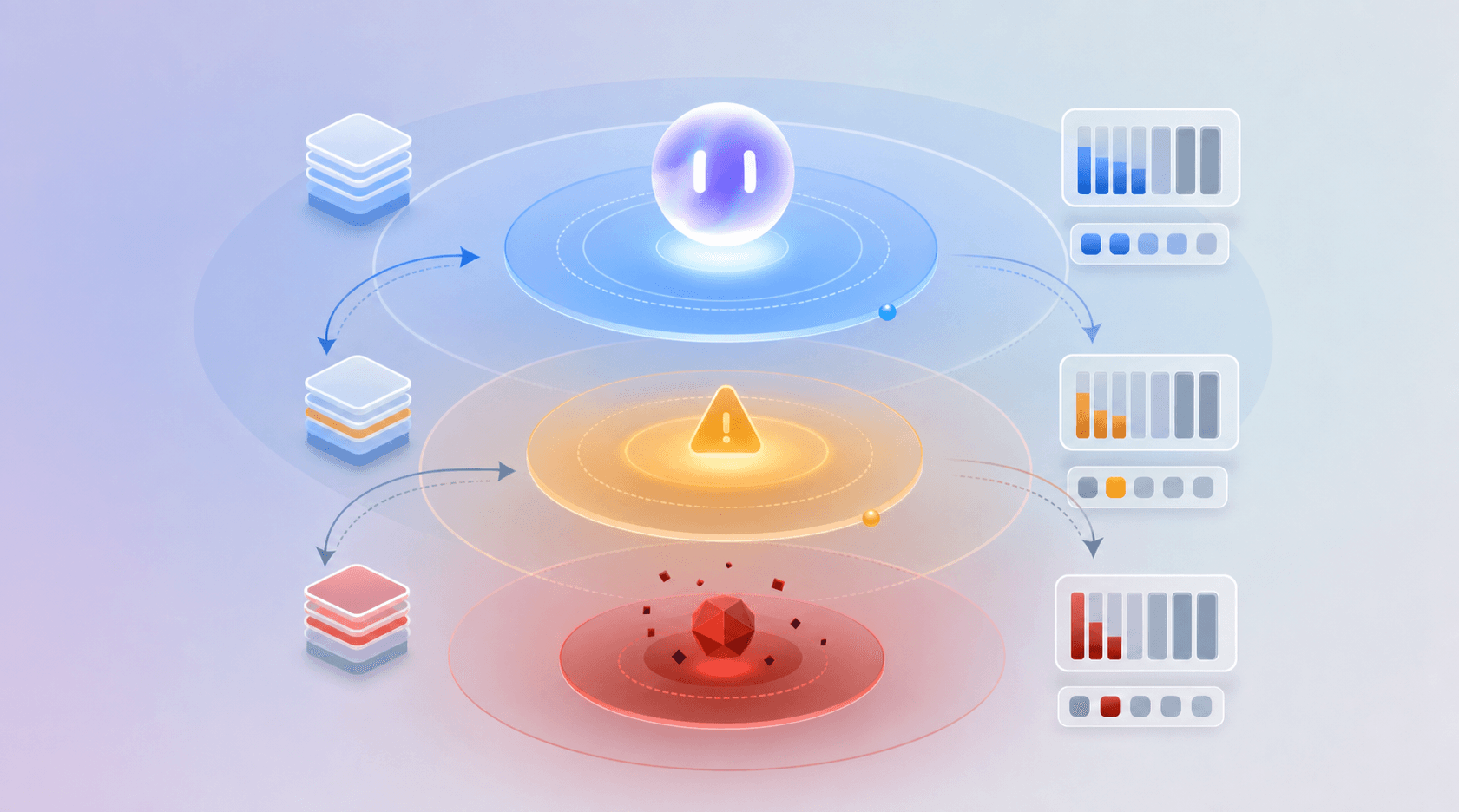
Manual smoke runs compound fast. Based on patterns mobile teams commonly report, covering a realistic set of test scenarios manually can consume four or five hours per test cycle, with senior engineers spending that time on repetitive verification work instead of building.
Flaky tests add a third layer. A test that fails intermittently trains the team to ignore failures, and ignored failures are where production bugs hide.
AI and Automation in QA Testing (2026)
AI has reshaped what QA teams can realistically ship in a sprint cycle. Where manual testing once set the ceiling on release frequency, automated and AI-assisted testing has raised that ceiling considerably for engineering teams.
A few changes worth knowing about:
- AI-assisted test generation from UI component trees based on how elements are structured, cutting the time spent writing test scaffolding from scratch.
- Self-healing test scripts detect when a selector breaks after a UI change and attempt to locate the correct element automatically. The maintenance load drops, but ownership of the test suite stays on your team.
- Visual regression tools compare screenshots pixel-by-pixel, catching layout breaks that functional assertions miss entirely.
- Continuous testing integrated into CI/CD pipelines means tests run on every commit instead of waiting until release, so failures surface when the changeset is still fresh and the fix is cheaper.
The question that separates teams shipping confidently from teams still burning hours on test upkeep is ownership: does your team write, maintain, and triage the test suite, or not? Script-based automation hands all of that back to your engineers. Minitap handles test authorship, execution, and maintenance automatically, so the coverage gains from AI do not come with a hidden maintenance bill.
That distinction is sharpest in mobile-native teams, where there is no DOM equivalent to anchor selectors and every UI change is a potential test breakage event. App-state conditions that only surface under specific runtime circumstances require an agent that adapts continuously. A selector-based suite needs someone to update it after every UI change. Minitap covers the failure modes traditional automation leaves exposed without adding maintenance work to your sprint. Teams shipping web alongside mobile get the same coverage from a single, with no separate test suites to maintain.
How Minitap Changes Mobile QA for Engineering Teams
Minitap is a fully autonomous QA agent that gives your team test coverage without owning the pipeline. You stop writing test scripts, fixing broken selectors after UI updates, and triaging flaky runs. That work stays with Minitap.
The agent adapts when your UI changes, which means coverage doesn't degrade between releases the way it does with script-based frameworks your team maintains internally.
For any engineering team running manual smoke testing or maintaining a script-based suite, this removes a recurring drain on senior IC time every release cycle.
Final Thoughts on Building QA Into Your Release Cycle
QA prevents the production failures that cost you App Store ranking and user trust. A bug caught in staging costs nothing to fix. The same bug reaching users triggers 1-star reviews and uninstalls that compound for weeks. Manual smoke testing across every device and every release is a known drain on senior IC time. Minitap is a fully autonomous QA agent that handles test authorship, execution, and maintenance automatically, so engineers stop writing test scripts, fixing broken selectors, and triaging flaky runs. Coverage stays current. Capacity stays with your team.
FAQ
What is QA in IT and what does it actually cover?
QA in IT stands for Quality Assurance: the systematic process of verifying software meets defined standards before reaching users. It covers functional flows, device compatibility, network conditions, OS version behavior, and regression testing across releases, catching defects during development before they reach release.
QA vs QC: which one should mobile teams focus on?
Focus on QA (Quality Assurance). QA prevents defects by building checks into your development workflow before code ships, while QC (Quality Control) inspects output after it's built to find what's already broken. Catching bugs earlier in the cycle costs less to fix.
Can I automate mobile QA without maintaining test scripts myself?
Yes. Minitap is a fully autonomous QA agent that handles test authorship, execution, and maintenance automatically. Your team gets test coverage without owning the pipeline or fixing broken selectors when your UI changes. When something fails, Minitap surfaces video proof, logs, and a fix prompt so you keep full visibility into what broke and why.
How much do QA engineers make in mobile testing roles?
Entry-level QA roles start between $55,000 and $75,000 annually in the US. Mid-level engineers with automation skills typically land between $85,000 and $110,000. Senior QA engineers with mobile-specific experience in iOS or Android test infrastructure commonly see $120,000 to $160,000 at mid-to-large companies.
What's the biggest challenge that script-based mobile QA misses?
App-state conditions and runtime edge cases. A test that passes in a clean environment may fail when the app has been running for several hours with low memory and other processes in the background. Script-based automation catches regressions along defined paths, but misses runtime issues that surface under conditions selectors were never built to reach. Minitap's autonomous agent reads the running app directly, exercising user flows under real app-state conditions, so those failure modes get caught before users see them.