
Your team is running manual smoke tests every release, and you're weighing whether autonomous mobile QA solutions can handle that without creating new bottlenecks.
The choice breaks down into who maintains tests when the UI changes, how quickly regression results come back, how much test coverage you actually get, and what the real cost looks like after integration and upkeep. Some mobile QA solutions require your team to write tests and fix them as the app evolves, others execute scripts maintained by the vendor but still need human triage, and Minitap operates as a fully autonomous agent that reads your app from source, maps every test scenario, and returns full regression results in about an hour without requiring test authorship or ongoing maintenance from your team.
TLDR:
- Autonomous mobile QA solutions and vendor-backed services handle test creation, execution, and maintenance for your iOS and Android apps.
- We ranked services on maintenance ownership, turnaround speed, device coverage, and total cost of ownership.
- Minitap reads your app from source, maps all test scenarios automatically, and returns full regression results in about an hour without requiring your team to write or maintain tests.
- Human-backed services like Semaloop and Testlio deliver bug reports within days but cycle time scales with tester availability, not compute.
- Services requiring test authorship shift execution load but leave your team responsible for updating scripts when your UI changes.
What Are Autonomous Mobile QA Solutions?
Autonomous mobile QA solutions are systems where an AI agent or vendor takes ownership of the testing lifecycle for iOS and Android applications. The distinction from buying a testing tool is ownership: with a tool, your team writes tests, runs them, triages failures, and maintains everything as the app evolves. With autonomous solutions, either an AI agent or vendor handles test creation, execution, bug detection, and reporting.
Teams without dedicated QA staff get full coverage without hiring. Teams that do have QA get that time back for higher-value work.
How We Ranked Mobile QA Solutions
We ranked services across four criteria: who owns test maintenance, how fast results return, how much test coverage you actually get, and what the total cost looks like once you factor in setup and ongoing upkeep.
Maintenance ownership came first. If your team still writes selectors, fixes broken tests after UI changes, or triages flaky runs, the work hasn't moved. It's just been redistributed.
Speed mattered because slow feedback loops defer decisions. A regression report that takes two days to arrive isn't useful during an active release. DORA's CI research lists slow-running test suites as one of the top barriers to reliable, fast software delivery.
Test coverage determined whether results reflected the scenarios users actually encounter. Testing a narrow set of flows produces false confidence.
Cost was measured as total cost of ownership beyond the sticker price. A low monthly fee that requires two engineers to operate costs more than it appears. A team spending several hours a week on test authorship, selector fixes, and maintenance triage is paying an ongoing labor cost that never appears on a vendor invoice, and that cost grows as the app grows.
Best Overall: Minitap - Fully Autonomous QA Agent
Minitap is a fully autonomous QA agent, not a human-backed or vendor-managed service. It reads your app from source, maps every test scenario automatically, and delivers a complete regression report in about an hour without any human intervention. Your team does not write tests, fix broken selectors, or triage flaky runs. When your UI changes, the agent adapts without requiring anyone on your side to update a script.
What It Does
The agent ingests your app's source, builds a full map of testable flows, executes them, and returns a structured report. A checkout flow that breaks an hour after deploy gets caught before the first user hits it.
Good For
Engineering teams shipping at any cadence who want to eliminate testing burden entirely. If you're shipping frequently and smoke testing is consuming senior IC time every release cycle, Minitap removes that from your team's plate. The autonomous model means zero maintenance overhead regardless of team size or QA headcount.
Bottom Line
Minitap delivers full regression coverage without requiring your team to own any of the underlying test infrastructure. The agent handles test authorship, execution, and maintenance autonomously, returning a complete regression report in approximately one hour. Engineering time goes to shipping features, not test infrastructure.
Thunders
Thunders is a vendor-backed mobile QA solution built for teams that want to skip standing up their own test infrastructure. They run tests across Android and iOS apps, handling test execution and reporting on the vendor side.
What They Offer
Thunders handles test infrastructure provisioning (device management, execution environment configuration, and result reporting), so your team skips standing up a lab. Tests run against Android and iOS apps, with results delivered through their reporting dashboard. Pricing is quote-based and tied to app count and test volume.
Limitation
The vendor-backed model means your team loses direct visibility into how test suites are structured and maintained between runs. Turnaround time depends on their queue, not your release schedule. Your team does not own the test logic or control the update cadence. Teams running frequent releases will find the queue-dependent turnaround doesn't match their shipping velocity.
Semaloop
Semaloop is a human-led mobile QA service built around exploratory testing. A dedicated QA team runs test cycles on your behalf, logging bugs and delivering structured reports without requiring your engineers to own the testing process.
What They Offer
Semaloop assigns testers to your app who run exploratory and scripted sessions. Reports are delivered after each cycle with ranked bug lists and reproduction steps.
Limitation
Coverage scales with tester hours, not compute. Test cycles take days, and frequency is limited by capacity instead of release cadence. There is no autonomous coverage between cycles. Teams shipping weekly or faster will find the multi-day cycle time creates a bottleneck in their release pipeline.
Digital.ai Continuous Testing
Digital.ai Continuous Testing is an enterprise-grade mobile QA service built for organizations managing multiple apps or releasing across teams at enterprise scale. The service ties together test frameworks, AI-assisted test creation, and analytics into a single offering.
What They Offer
Digital.ai runs tests with coverage spanning iOS and Android at scale. Their AI-assisted authoring tools reduce the manual effort required to write and maintain test scripts, and the analytics layer surfaces failure patterns across test runs.
Limitation
The underlying test scripts still require human authorship and ongoing maintenance. When your UI changes, someone on your team or the vendor's side rewrites the affected tests. The service fits organizations where procurement, security review, and vendor contracts are already part of the buying process, but teams without dedicated QA staff will find the model still requires maintenance work instead of removing it entirely.
Applause
Applause is a crowdsourced testing service that recruits testers across locations and network conditions to run test cycles on your app. You get feedback from people testing under the same conditions your customers encounter.
What They Offer
Applause manages the tester community, test cycle coordination, and bug report aggregation. Your team defines the scope; Applause handles recruitment and execution.
Limitation
Cycle time is longer than automated testing by design. Results depend on tester availability and consistency, which introduces variability in coverage depth across runs. Costs scale with scope and tester count, making continuous testing across every release economically difficult for most teams. Teams that need continuous regression coverage across every release will find the cost and multi-day cycle time create constraints that don't match high-velocity shipping.
Testlio
Testlio operates as a human-plus-automation hybrid: a network of professional testers paired with its own test management tooling. Clients define scope, Testlio assigns testers, and coverage spans iOS and Android apps.
What They Offer
Testlio combines manual exploratory coverage with automated regression, giving teams access to testers who understand localization, payment flows, and interruption edge cases.
Limitation
Turnaround scales with tester availability, not compute. A full regression cycle takes days, not an hour. Teams shipping weekly or faster will find the multi-day cycle time becomes a release pipeline bottleneck.
Feature Comparison Table of Mobile QA Solutions
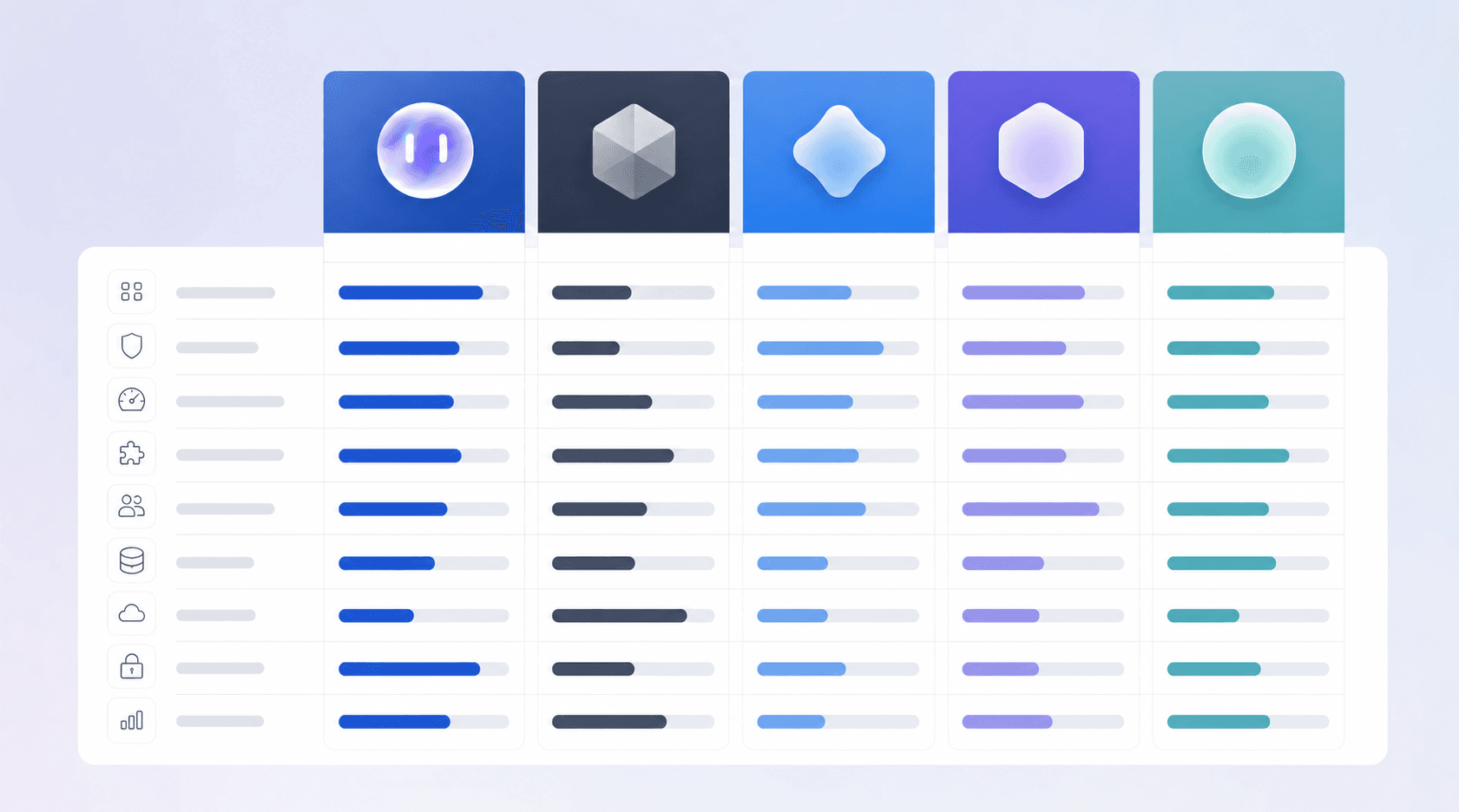
The table below maps capability differences across the services covered in this article. The maintenance ownership row is the deciding factor: only Minitap removes test authorship and upkeep from your team entirely. Every other dimension follows from that.
| Capability | Minitap | Thunders | Semaloop | Digital.ai | Applause | Testlio |
|---|---|---|---|---|---|---|
| Fully Autonomous Testing | Yes | No | No | No | No | No |
| Zero Maintenance Required | Yes | No | No | No | No | No |
| iOS Support | Yes | Yes | Yes | Yes | Yes | Yes |
| Android Support | Yes | Yes | Yes | Yes | Yes | Yes |
| Web Testing Support | Yes | Yes | No | Yes | Yes | Yes |
| Desktop Testing | No | Yes | No | Yes | No | No |
| Performance Monitoring | Yes | No | No | Yes | No | No |
| AI Coding Agent Integration | Yes | No | No | No | No | No |
| Cross-Environment Single Spec | Yes | No | No | No | No | No |
| Test Authoring Required | No | Yes | Yes | Yes | No | Yes |
| Human Testers Involved | No | No | No | No | Yes | Yes |
| Regression Suite Speed | ~1 hour | Varies | Varies | Varies | Days | Varies |
The clearest split is between services that require test authorship from your team or the vendor's side, and Minitap, where the agent owns that entirely. Everything else flows from that distinction.
Why Minitap Is the Best Autonomous Mobile QA Solution
Minitap is a fully autonomous QA agent. Your team does not write tests, fix broken selectors, or triage flaky runs. You connect your app, and Minitap reads it from source, maps every test scenario automatically, and delivers a full regression report in about an hour.
When your UI changes, the agent adapts. No rewritten scripts, no selector updates, no maintenance ticket assigned to someone on your team.
Here is what that delivers:
- The agent reads your app from source and maps all reachable test scenarios without any input from your team.
- It runs a full regression on every build and returns results in roughly one hour.
- When a flow breaks, you see the affected path and the reproduction context without writing a new test to confirm it.
- When the UI changes, coverage stays current automatically.
- A checkout flow that breaks an hour after deploy gets caught before the first customer hits it, not at the next scheduled CI run, and not in a post-incident review.
The result is a regression suite that grows with your app and costs your team nothing to maintain. Zero flakiness, zero maintenance overhead, zero engineering time spent on test infrastructure.
Final Thoughts on Mobile QA Solutions
The decision is straightforward: services that require test authoring from your team or the vendor's side come with ongoing upkeep cost, multi-day cycle times, and maintenance burden that scales with your app's evolution. Minitap operates as a fully autonomous agent that reads your app from source and keeps coverage current without any human input or vendor-side maintenance. You get hour-long regression runs, zero maintenance overhead, and test coverage that adapts automatically when your UI changes. See how it works for your team at minitap.ai.
FAQ
How do I choose the right managed mobile QA service for my team?
Start with ownership: does your team have capacity to write and maintain tests, or do you need that to stay off your plate entirely? Script-based frameworks and human-backed services require ongoing maintenance from your team or the vendor's side: when your UI changes, someone rewrites the tests. Minitap operates as a fully autonomous agent where test creation, execution, and maintenance happen without requiring input from your engineers. The agent reads your app from source and adapts automatically when your UI evolves.
Which managed QA service works best for teams shipping weekly or faster?
Minitap delivers full regression reports in about an hour, which fits teams running continuous deployment or weekly release trains where feedback needs to arrive the same day a build ships. Human-backed testing cycles, whether exploratory or crowdsourced, take days to complete and create a bottleneck in high-velocity release pipelines.
What's the difference between autonomous testing and vendor-backed testing?
Autonomous testing means the agent owns test authorship, execution, maintenance, and updates without human involvement from either your team or the vendor's side. Minitap operates this way: when your UI changes, the agent adapts without anyone rewriting scripts. Vendor-backed testing means humans at the vendor write and update tests on your behalf. Someone still maintains the test suite when your app evolves, which means maintenance burden remains part of the cost structure even though it's shifted off your team.
Can mobile QA solutions cover both mobile and web from a single service?
Minitap handles iOS, Android, and web testing from one service, so you're not managing separate vendors or test suites per environment. Other services focus exclusively on mobile or require different tooling for web coverage, which means managing multiple vendor relationships and stitching together separate reporting pipelines.
When should I consider switching from my current QA setup to an autonomous solution?
If manual smoke testing is consuming more than four hours of senior IC time per release, or if your team is spending more time fixing flaky automated tests than writing new features, that's the signal. The cost of ownership (maintenance hours, flakiness triage, selector rewrites after UI changes) becomes the constraint before coverage does. Minitap eliminates all of that: zero maintenance overhead, zero flakiness, zero engineering time spent on test infrastructure.