

Picking between cloud device farms and managed app testing services gets harder when you're managing several apps across iOS and Android.
The real question is not which service has the longest feature list but which one covers your specific device matrix, integrates with your CI/CD pipeline, handles mobile application penetration testing services if you need them, and prices in a way that scales with your release volume without burning budget on devices your users don't run.
TLDR:
- Device coverage matters more when it matches your actual user base, not market share.
- Minitap's autonomous QA agent covers regression runs and exploratory flows with no scripts to write or maintain.
- Cloud device farms price per-minute or per-slot, with slot pricing winning at high test loads.
- Security testing checks for known vulnerability classes while penetration testing actively attempts to exploit the app.
Key Criteria for Comparing Mobile Application Testing Services
When comparing mobile application testing services, a few factors tend to matter more than others once you're managing multiple apps at scale.
- Execution speed affects how quickly test results come back, which directly impacts your release cadence.
- Integration depth covers how well the service connects with your CI/CD pipeline, test frameworks, and bug tracking tools.
- Pricing structure matters because per-minute, per-device, and subscription models behave very differently at volume.
Security testing support is worth checking separately, since mobile application security testing services are often treated as an add-on instead of a default capability.
Device Fragmentation and Coverage Strategy
There are 24,000 active Android models in use globally, and iOS spans 20+ devices across multiple OS versions. Testing every configuration is off the table.
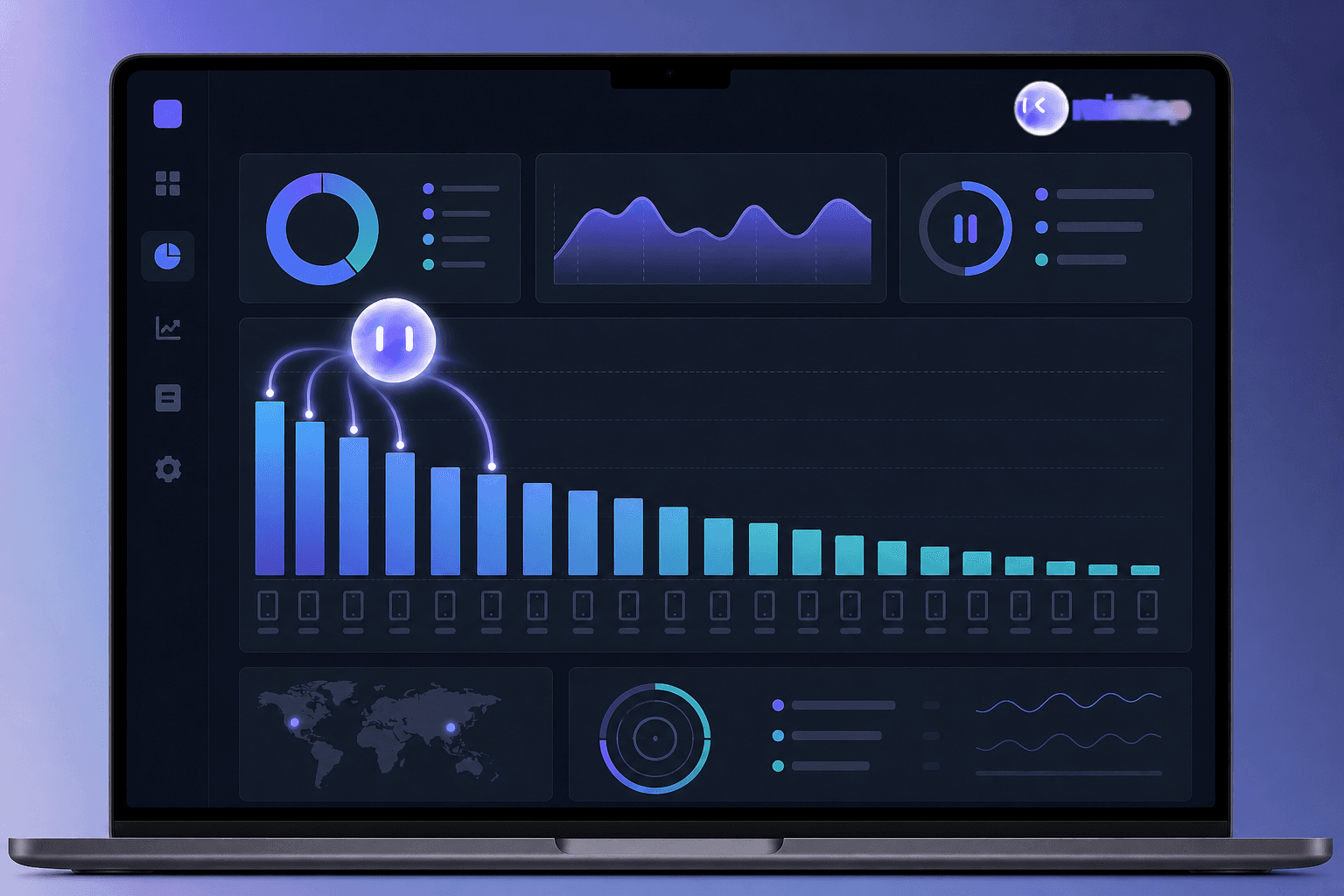
The practical approach is a device matrix built from your own analytics. Traffic-weighted selection, focusing on the devices your actual users run, beats market-share-weighted selection, which may not reflect your audience at all. A mid-tier Android device generating 15% of your sessions deserves more test coverage than a flagship that accounts for 2%.
Cloud devices cover the breadth your analytics flag, the configurations real users actually run.
Manual Testing vs Automated Testing for Mobile Apps
Manual testing burns senior IC time on exploratory flows and first-pass UX review, the judgment calls that decide whether something actually feels right. Automated testing owns repetitive regression runs and anything that needs to execute consistently across dozens of device configurations, but a scripted suite alone only checks the assertions it was written for, missing whether a gesture feels sluggish or a layout breaks on a narrow screen.
Minitap closes that gap for both. The autonomous agent walks the real flow the way a person would, catching the UX class that scripted suites structurally miss, while running full regression coverage in the same pass. For flows that are unstable, low-frequency, or judgment-dependent, Minitap handles them without requiring your team to build or maintain anything, so manual testing time and scripted maintenance both disappear from your release cycle.
Autonomous QA Agents vs In-House QA Teams
In-house QA teams and fully autonomous QA agents take fundamentally different approaches to test ownership, and that difference shapes everything from release cadence to maintenance overhead.
In-house teams keep QA close to the codebase and embedded in sprint cycles, but every test they author becomes a test they own and maintain as the app changes.
Minitap's fully autonomous QA agent takes authorship and maintenance off your team entirely, with full transparency built in. Every run ships a session trace, screenshots, and a written explanation of each finding. You get broader device coverage and zero maintenance overhead, with no permanent headcount required.
Cloud-Based Device Farms and Testing Infrastructure

There are two main deployment models worth understanding here. Public cloud farms cover broad device availability with pay-as-you-go pricing and CI/CD hooks, but your team still owns test authorship, script maintenance, and fleet management on top of that infrastructure. Minitap removes that ownership entirely: the agent runs on cloud iOS simulators and Android emulators, so device access is never a cost your team carries day to day, and the agent owns authorship and maintenance instead of your team.
Pricing Models
Pricing typically runs per minute of device time or per concurrent slot. Per-minute models cost less at low volume; slot-based pricing becomes more economical at high test loads across multiple apps.
AI-Powered Mobile Testing Services
AI has shifted how mobile testing gets done. Instead of writing and maintaining brittle test scripts, AI-powered services learn from your app's UI, adapt to layout changes, and generate test cases automatically.
Minitap is built around this approach. For engineering managers running multiple apps across iOS and Android, this cuts the overhead of manual test maintenance without sacrificing coverage depth.
Security and Penetration Testing Services for Mobile Apps
Mobile apps handle sensitive data ranging from authentication tokens to payment credentials, making security testing a non-negotiable part of any release process. Mobile application security testing services and mobile application penetration testing services cover two distinct but related needs.
Security testing checks for known vulnerability classes like insecure data storage, weak encryption, and improper session handling. In practice, that looks like scanning for hardcoded API keys, unencrypted local databases, and authentication tokens stored in plain text. These checks run against a known list of failure patterns and flag anything that matches.
Penetration testing goes further, with testers actively attempting to exploit the app the way an attacker would. A pen tester might intercept API calls through a proxy, attempt to bypass biometric authentication, or test whether a jailbroken device can access restricted app functionality. The output is a report of actual exploitable weaknesses, not merely theoretical ones.
When to use each: security testing fits as a per-release check that catches regressions in how data is stored or transmitted. Penetration testing makes sense before a major launch, after major architecture changes, or on a fixed schedule for compliance-heavy apps. Running both together gives you breadth and depth that neither covers alone.
For engineering managers owning apps in finance, healthcare, or other compliance-heavy sectors, look for services that test against the OWASP Mobile Top 10 and provide remediation guidance beyond a findings report. Vendor deliverables should include severity ratings, reproduction steps, and fix guidance specific to your stack, not generic recommendations.
Types of Mobile Testing Services by Testing Scope
Testing services don't all cover the same ground. Knowing the difference helps you buy what your release process actually needs instead of a bundled suite built for someone else's problems.
| Type | What it covers |
|---|---|
| Functional | User flows, feature validation, and expected behavior across the app |
| Performance | Memory leaks, battery drain, thermal stress, and load handling |
| Compatibility | OS version differences and device-specific hardware behavior |
| Usability | Layout correctness, gesture feel, and UX quality |
| Regression | Whether existing flows still work after new changes ship |
Most services bundle several of these but lead with one. Match the service's primary focus to the failure types your team actually encounters most.
Market Size and Growth of Mobile Application Testing Services
The global mobile application testing services market was valued at $8.6 billion in 2024 (Market Research Future), projected to reach $32.83 billion by 2035, growing at a CAGR of 13.08%. That growth reflects a straightforward reality: mobile apps are now core business infrastructure, and the cost of shipping broken experiences is measurable in user churn and revenue.
For engineering teams managing one or more apps at scale, this market expansion also means more vendors, more tools, and more decisions to sort through.
Pricing Models and Cost Considerations
Pricing varies across services in ways that can reshape your budget planning more than the service tier alone.
There are three main pricing models to know about:
- Per-project pricing is common in manual QA engagements and one-off security audits, making it useful when testing needs are irregular or scoped to a single release.
- Monthly subscriptions offer predictability at steady release cadences, which works well for teams shipping on a regular cycle.
- Hourly consulting is standard for penetration testing and exploratory manual work where scope is hard to define upfront.
Cost scales with your device matrix size, testing frequency, and whether automation setup is bundled into the contract or billed separately. Fully autonomous QA agents fold authorship and upkeep into one predictable price, removing the maintenance overhead that inflates the real cost of script-based test frameworks over time.
How Minitap Delivers Autonomous Mobile QA Coverage
Traditional end-to-end testing routinely misses bugs that break in production, because scripted suites only cover the paths they were written for. Minitap closes that gap by running AI agents against real builds, covering devices, network states, data conditions, AI features, and runtime edge cases that scripted suites never reach.
We own the test suite entirely. No maintenance falls on your team, no selectors to fix, no test code sitting in your repo. Every run reports what was tested, what was skipped, and what risk remains before the release ships.
Final Thoughts on Mobile Testing Services That Match Your Release Velocity
The gap between what you ship and what breaks in production closes only when one service owns the entire testing loop, from authorship through maintenance. Minitap's fully autonomous QA agent maps every test scenario from your source code, runs continuous regression and exploratory coverage across iOS, Android, and web, and ships a session trace with every finding, all without a script your team writes or maintains. Connect your codebase, and the QA loop runs itself. See how it works at Minitap.
FAQ
Cloud device farms vs managed testing services: which one should engineering teams choose?
Cloud device farms still put script maintenance and result triage on your team's plate. Minitap's autonomous QA agent removes that requirement entirely: it owns test authorship, execution, and maintenance straight from your codebase, so your team never touches the suite, whether you run a large QA org or none at all. It works for any engineering team shipping mobile, and it's especially valuable for high-cadence teams where manual QA and brittle scripts can't keep pace.
Can automated mobile testing catch the same bugs a manual QA team would find?
Minitap's autonomous agent walks your live app the way a manual tester would, instead of running from a fixed script. That's how it catches the UX class manual QA is valued for, like a gesture that feels sluggish or a layout that breaks on a narrow screen, alongside full regression coverage in the same run. Your team gets that judgment without keeping a manual QA function around.
What's the fastest way to add security testing without hiring a dedicated team?
Look for mobile application security testing services that test against the OWASP Mobile Top 10 and deliver remediation guidance beyond findings reports. These services run as a one-time engagement or per-release check without requiring permanent headcount.
How do I know which devices to focus on in my test matrix?
Pull device data from your own analytics and weight by actual session volume. A mid-tier Android generating 15% of your traffic deserves more coverage than a flagship with 2%. Traffic-weighted selection beats market-share data that may not reflect your audience at all.
Which teams benefit most from Minitap's autonomous mobile testing?
Any engineering team shipping mobile benefits from zero test maintenance and a full regression run in about an hour, since Minitap's agent owns authorship, execution, and upkeep from day one. That value compounds fastest for teams shipping weekly releases or faster, where manual smoke testing and brittle, selector-based scripts can't keep pace with AI-accelerated development. Mobile-native teams feel this hardest since there's no DOM equivalent to fall back on, and teams shipping mobile and web together get the same coverage from one agent.