

Your staging run is green, but the next regional rollout will expose flag combinations that run never touched, like a German checkout flag paired with a US pricing experiment. Even a completed purchase can hide a broken layout when two flagged panels compete for space. Feature flag combination testing needs both journey checks and visual checks tied to the actual region and environment. The way forward is a selected matrix of risky states, backed by rollout monitoring and clear thresholds for stopping expansion.
TLDR:
- Feature flag combination testing checks interactions that isolated toggle tests miss.
- Tie your expected results to geography, environment, and flag states together.
- Use pairwise coverage as a baseline; test higher-order payment and access-control combinations.
- Run high-risk combinations in every CI pipeline and retire obsolete flags to shrink your matrix.
- Minitap is an AI QA employee that writes and runs regression scenarios across flag combinations and proposes test updates when the app changes. It surfaces blockers with recommended next actions and runs web and mobile regression across flag combinations, with video evidence for every run.
What Is Feature Flag Combination Testing
Feature flag combination testing verifies product behavior when multiple flags are active or inactive together. Feature flags let you change behavior without redeploying. Basic flag testing checks a toggle's on/off states; combination testing checks interactions between toggles and the surrounding system.
A pricing flag, regional checkout flag, and experiment flag might each pass alone but together show a price checkout rejects. The test needs to verify the user journey under those combined states, especially where flags share logic.
Why Feature Flag Combinations Create A Combinatorial Explosion
Feature flag combination testing grows exponentially: n boolean flags produce 2^n states; multivariant flags multiply that count. As an illustrative calculation, a checkout team maintaining eight boolean flags across payment and subscription logic plus three four-variant offer experiments would face 16,384 configurations before excluding invalid combinations. If all combinations are valid, exhaustive coverage means repeating the purchase journey for every configuration, rather than only checking each toggle separately. Each run needs the requested flag states, a reset cart, and verification that the displayed price matches the charged amount. Regional currencies and supported environments multiply that work further. Even this bounded checkout scope can force the team to defer exhaustive runs beyond the release window; dozens of active flags make that constraint harder to manage.
Dormant paths carry financial risk and are a classic case for negative testing techniques. According to FlagShark's account, Knight Capital's 2012 incident involved a repurposed flag triggering dormant Power Peg code on a server that missed an update. The incident lasted roughly 45 minutes, with losses initially reported as $440 million. Include dormant paths in test scope whenever configuration changes can make them reachable again.
The Configuration Matrix: Geography, Environment, And Feature Flags Together
Feature flag combination testing in staging can leave regional checkout behavior unchecked. Geography changes currency and legal requirements; environment changes service settings and CMS content.
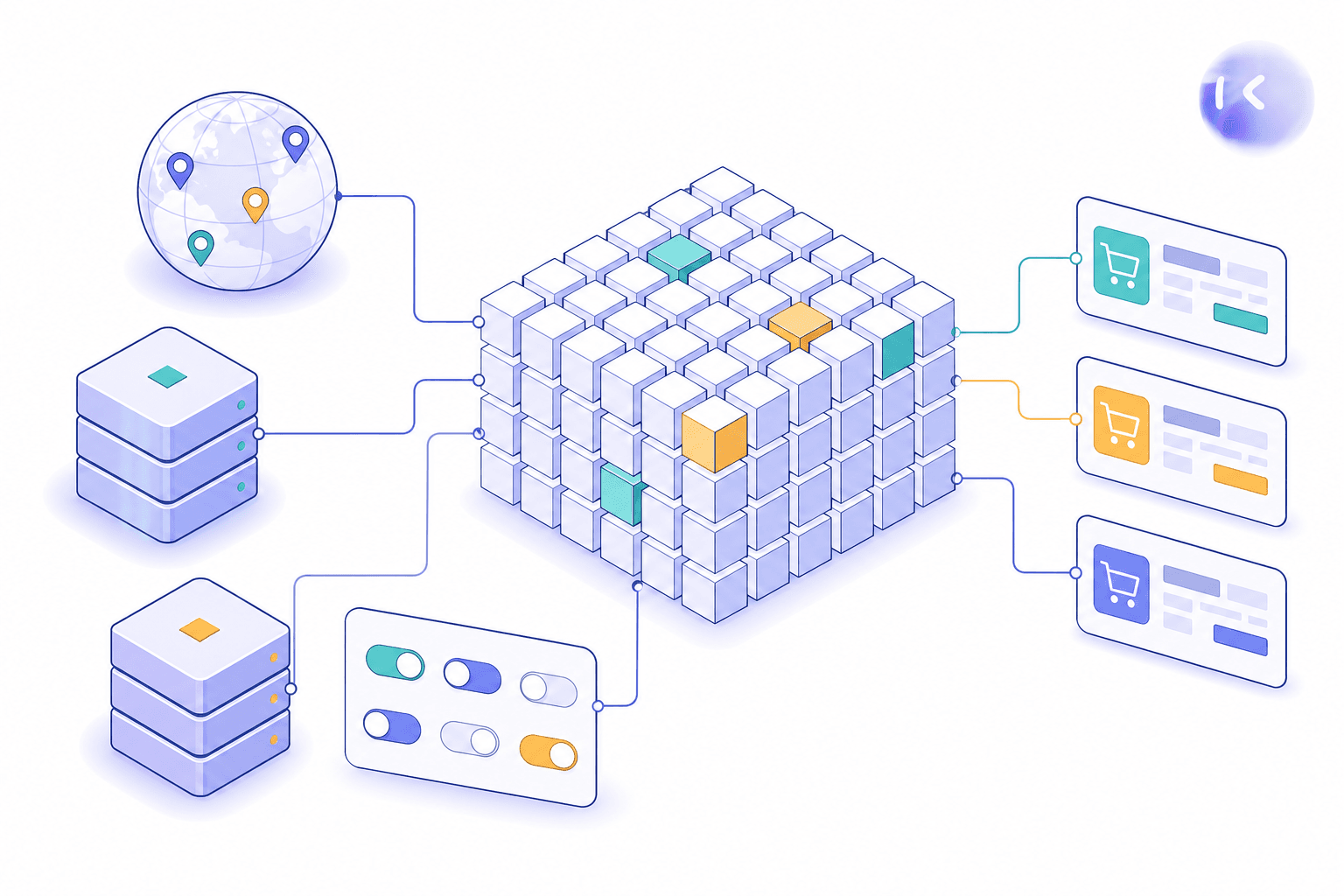
For a hypothetical subscription checkout:
| Configuration | Expected outcome |
|---|---|
| US, staging, offer flag on | Dollar price with draft offer copy |
| Germany, production, offer flag on | Euro price with approved regional disclosures |
| Germany, production, offer flag off | Standard price with required disclosures retained |
Tie each expected result to the full configuration, not toggle states alone, an approach that pairs naturally with spec-driven development.
Common Pitfalls That Undermine Feature Flag Combination Testing
An untested rollout branch can block checkout. Check feature flag combination testing for these symptoms:
- Fixtures use defaults: rollout states remain unchecked until customers receive them.
- Flags pass separately: shared-logic interactions leave combined behavior unverified.
- Old toggles lack owners: deferred cleanup leaves unclear branches. Jonathan Hall describes long-abandoned flag logic persisting for months or years.
- Cleanup bypasses regression: treating flag removal as housekeeping skips verification of the surviving path, allowing deletion-related defects into production.
Pairwise And Risk Based Strategies For Reducing The Feature Flag Matrix
Pairwise testing covers every pair of parameter values at least once. Use it as a feature flag combination testing baseline when exhaustive coverage exceeds the release window.
A review of general combinatorial testing research reports one study’s cumulative failure coverage across input parameters: 67% with one parameter, 93% with two, and 98% with three. These figures are not from feature-flag-specific studies.
Pair coverage does not guarantee detection of higher-order defects.
Layer risk-based selection onto that baseline: test higher-order combinations around payment or access-control flags, where failures could block purchases or expose restricted content.
Testing Feature Flags Across The Test Pyramid
A flag-dependent API change can block checkout orders. Split feature flag combination testing by layer:
- Unit tests: inject or mock flag lookup and supply explicit states to check branching logic.
- Integration tests: use dedicated flag environments or targeting rules, following SIT scenarios, to verify service contracts, including checkout's handling of flagged pricing responses.
- End-to-end tests: target test accounts with specific configurations and exercise UI paths through purchase confirmation.
Keep detailed branch checks near the code. Running every permutation end to end repeats setup and delays feedback, a tradeoff teams are rethinking across the AI-native SDLC.
Visual Regression Risks In Flag Combination Testing
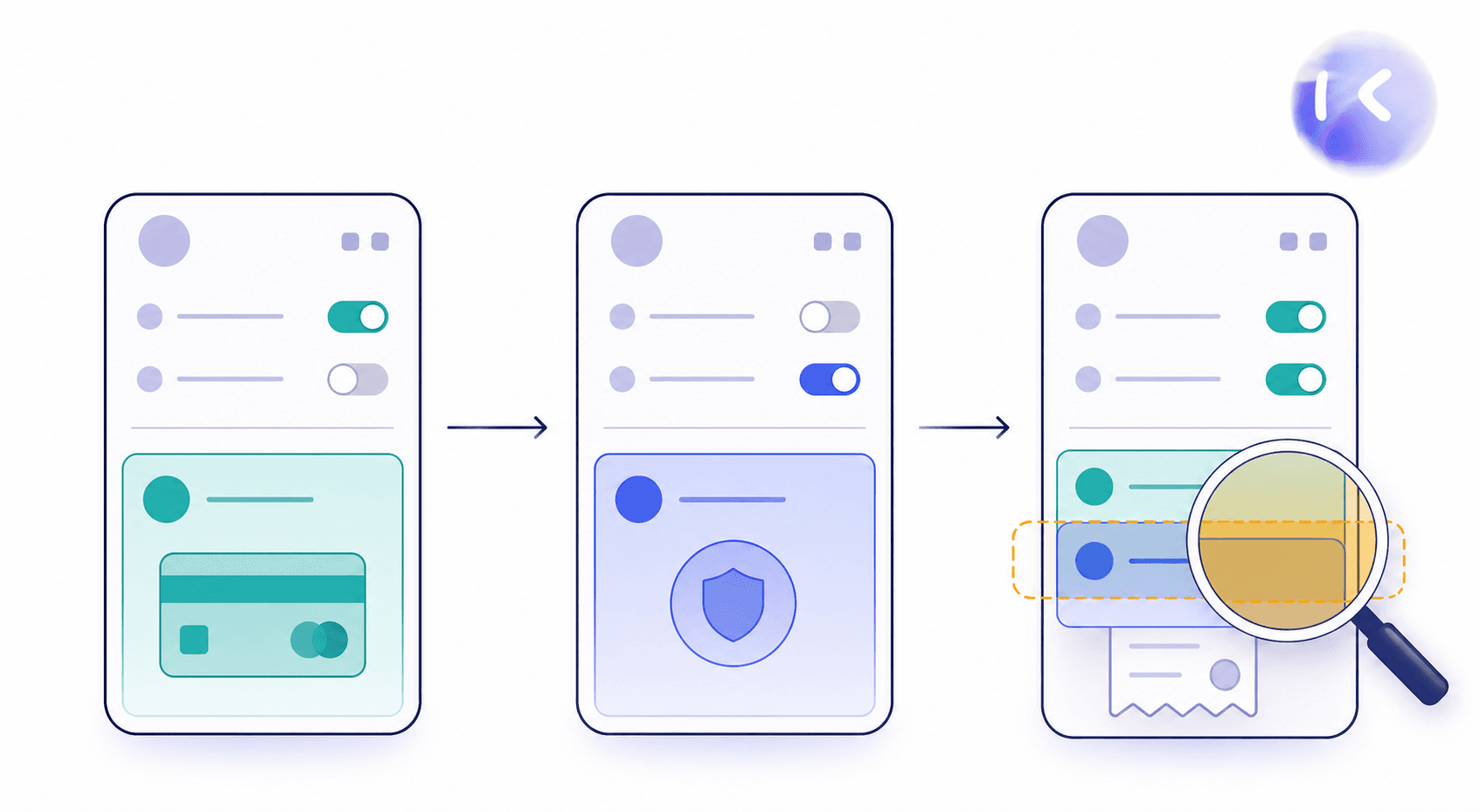
A purchase can succeed while overlapping controls hide the receipt link. Feature flag combination testing needs visual checks because functional assertions can pass despite a broken UI. Watch for:
- Layout conflicts when separately gated panels share space.
- Style leakage from one flagged component into another.
- Responsive layouts that break only when two flags are active together.
Capture screenshots for high-risk combinations at matching viewport sizes, compare them against approved baselines, and inspect differences, regardless of which SDLC model your team follows. Include narrow-screen states where newly visible components compete for room.
Feature Flag Combination Testing In Production And Progressive Rollouts
Purchases can fail or access checks break when production traffic exercises combinations absent from staging. Feature flag combination testing before release remains necessary; progressive rollouts limit exposure to missed interactions.
- Start with a canary cohort, then expand through percentage-based rollouts.
- Use dark launches to exercise hidden paths without exposing unfinished features, and isolate side effects, an especially important discipline when testing vibe coded apps.
- Track error rates and journey completion by flag combination; record active configurations in logs.
Treat observability as ongoing testing. Set stop thresholds before expansion and rehearse switching flags off when those failures occur.
CI/CD Pipelines And Feature Flag Lifecycle Management
Make feature flag combination testing explicit in pipeline stages as part of a broader TestOps practice:
- Version flag definitions and targeting rules alongside code for review.
- Resolve each selected configuration during setup; fail setup if the requested state cannot be applied.
- Run the highest-risk combinations on every pipeline execution.
- Gate promotion on named checks passing, tying results to the build and configuration revision.
After full rollout, schedule flag retirement as required technical debt work. Remove obsolete matrix entries with the flag so dead flags do not keep expanding the configuration inventory.
Best Practices For Managing The Feature Flag Configuration Matrix
Give feature flag combination testing a budget and an owner. Test selection cannot control matrix growth when new flags enter without rules.
- Keep a flag registry with purpose-based names, an accountable team, and a sunset deadline.
- Cap active flags per team. Require an expiry plan for exceptions.
- Record valid combinations and dependencies: an upsell flag requires the subscription flow to be on. Exclude impossible states from test generation, a check that matters as more flag logic comes from AI coding agents.
- Review the registry every sprint for overdue deadlines and dependency rules that no longer match supported product behavior, much like reviewing script-based automation suites as flags change underneath them.
How Minitap Handles The Configuration Matrix Problem
Minitap, our AI QA employee, runs visual black-box functional regression across web and mobile journeys, including geography, environment, version, CMS, and feature flag combinations. Specs, tickets, documentation, and existing cases guide feature flag combination testing. When testing is blocked or expectations are ambiguous, Minitap recommends next actions with context. Every run includes video evidence and actionable findings.
To put the app into the right state, mini, Minitap's AI QA agent, has two options. On web, mini can set feature flags or session state with cookies and local storage. When mini builds your app, you can inject feature flag overrides as build environment variables. Those values do not appear in run reports.
Upload existing cases, edit scenarios in plain language, and mark findings “Not a bug,” strengthening mobile test coverage over time. Reasons carry into subsequent runs, keeping configuration decisions reviewable as the matrix grows.
FAQ
Can Minitap start feature flag combination testing before our configuration inventory is complete?
Minitap can start with a bounded release scope, such as checkout, login, or subscription changes, plus their known flag dependencies and supported regions, rather than waiting for a full inventory. It builds test scenarios from your specs, tickets, and existing cases, and when a flag's expected behavior is unclear, Minitap surfaces that gap with a recommended next action instead of guessing, so missing context becomes visible early.
Can Minitap test feature flag combinations across iOS, Android, and web without duplicating test cases for each app?
Minitap tests the same flag combination across iOS, Android, and web from a single description of the journey and acceptance criteria, rather than requiring a separate test case for each app. Your team records only the differences by app, region, or flag state, and Minitap writes and maintains the scenarios needed to verify each interface against that expected behavior.
How does Minitap help us reproduce a failed test run when feature flags change during a rollout?
Minitap provides video evidence and written findings for every run. Keep a record of the flag states and configuration you set for each run, so your team can restore that exact configuration instead of relying on current rollout percentages, which may assign different states.
How can Minitap reduce the regression testing maintenance burden created by frequent feature flag changes?
Minitap writes and runs the scenarios for feature flag combinations without requiring your team to write or update scripts as flags change. When the app changes, Minitap proposes updates to its own tests and asks the team to review only the changes it cannot settle on its own, so engineers stop rewriting checks every time a flag is added, retired, or reconfigured.
How does Minitap compare to script-based automation for testing feature flag combinations?
Script-based automation requires your team to write and maintain a test for every flag state and combination, with logic that breaks each time a flag changes. Minitap instead understands the product from specs, tickets, and documentation, decides which combinations matter for a release, and runs them as black-box visual checks on real interfaces, so your team gets regression coverage of flag interactions without writing the suite that checks them.
Final Thoughts on Feature Flag Combination Testing
Your matrix needs upkeep as much as coverage. You can retire old flags and carry useful checks into each release. See how Minitap keeps configuration testing reviewable with video evidence and actionable findings.