

If your team is mid-argument about which SDLC model to run on the next build, you already know the stakes: pick wrong and you're either drowning in rigid documentation or shipping bugs nobody caught until production. Waterfall, the V-model, spiral, agile, and a handful of leaner variants all handle the same seven phases differently, and each one trades certainty for speed in its own way. Once you see where each SDLC model absorbs risk and where it doesn't, matching one to your project stops being a guess.
TLDR:
- Every SDLC model shares seven phases; only their order and repetition differ.
- Waterfall fits fixed scope, while agile and iterative models absorb changing requirements faster.
- Standish Group research found only about 31% of projects rate as successful across models.
- Shift-left testing catches defects during design or each sprint instead of at the final gate.
- Minitap runs full regression across mobile, web, TV, and browsers in about one hour inside any model's testing phase.
What Is a Software Development Life Cycle Model
A software development life cycle is the structured process a team follows to plan, build, test, and maintain software. An SDLC model is narrower: the specific framework (waterfall, agile, spiral) that governs how those phases sequence, repeat, and overlap, and how much room there is to circle back once requirements shift.
That distinction matters because model choice shapes how fast a team can move, how much risk they tolerate before catching a problem, and whether changing requirements becomes a minor detour or a full restart.
The Seven Phases Common To Every SDLC Model
Every SDLC model draws from the same seven building blocks. What changes is the order, the overlap, and how often teams repeat them.
- Planning: define scope, budget, timeline, and feasibility before any code gets written.
- Requirements analysis: gather and document what the software needs to do, and for whom.
- Design: translate requirements into architecture, data models, and interface decisions.
- Development: write the code based on the design.
- Testing: verify the software works as intended and catch defects before users do.
- Deployment: release the software into a live environment.
- Maintenance: fix bugs, patch issues, and update the software after release.
Waterfall runs these in a strict line. Agile compresses all seven into short, repeating cycles. Spiral loops through them multiple times, each pass reducing risk. The phases never change. Their arrangement is the entire story.
Why The SDLC Model You Choose Matters
The model you pick determines what a missed requirement costs: an afternoon in planning, a sprint after deployment. Standish Group's CHAOS research found only about 31% of projects rated successful, with the rest challenged or failed. Understanding quality assurance fundamentals helps teams avoid becoming part of that statistic.
- Timeline predictability: upfront planning gives a fixed end date; iterative models trade certainty for speed.
- Defect cost: earlier detection means cheaper fixes.
- Change tolerance: some models absorb new requirements mid-project; others restart.
The Waterfall Model
Waterfall runs seven phases in a straight line: planning, requirements, design, development, testing, deployment, maintenance. No phase begins until the one before it is signed off. That rigidity works when scope is fixed from day one, such as regulatory filings, government contracts, or embedded systems tied to hardware that cannot be revised once manufactured.
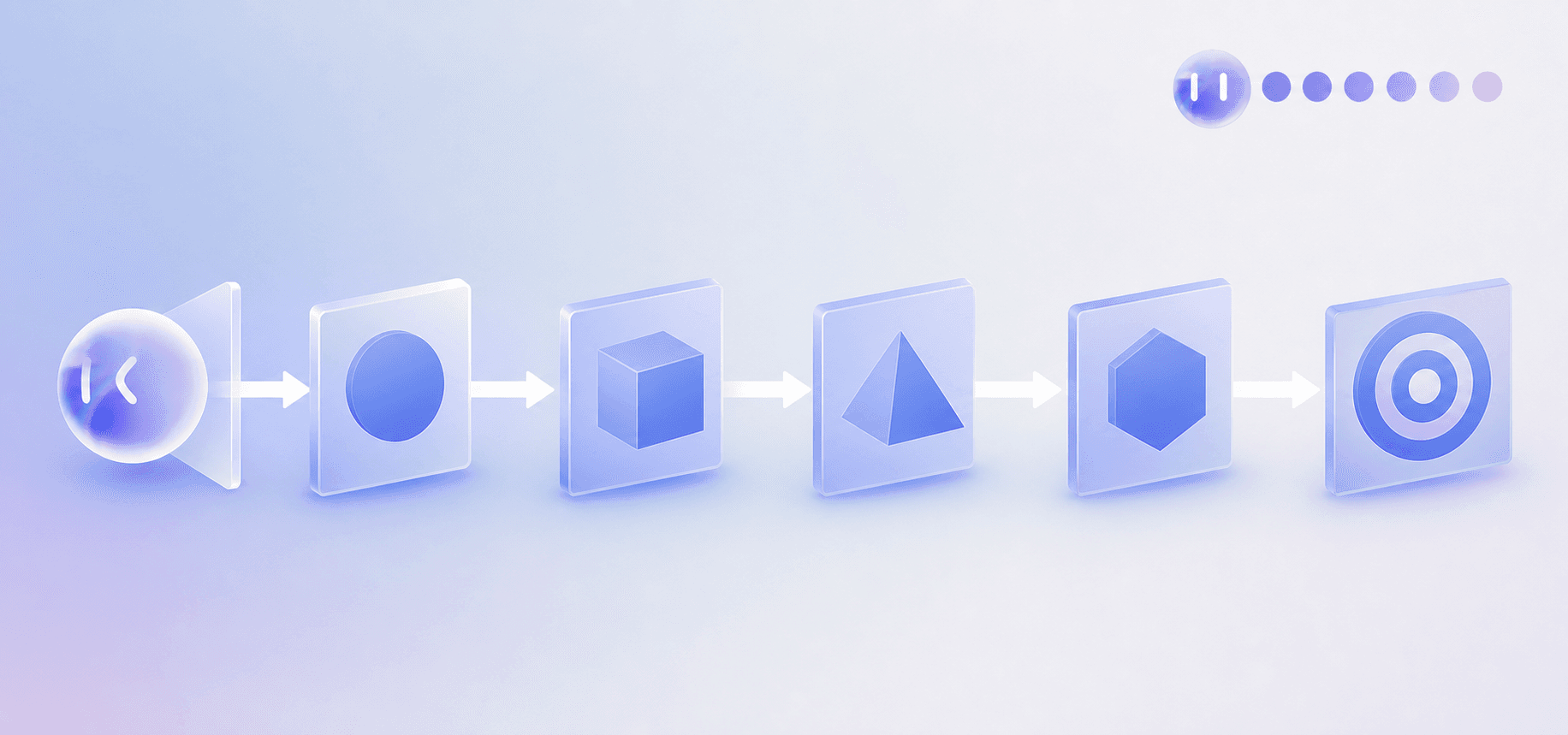
The upside: clear documentation at every gate, a fixed budget stakeholders can plan around, and simple handoffs between teams.
The downside shows up when requirements shift. Testing sits near the end, so defects tracing back to a design flaw surface only after development is done. Software defect research has shown production bugs take more time and resources to fix than the same defect caught earlier, with some analyses putting the cost multiplier at 10x or more depending on severity and discovery timing.
Waterfall remains the model every other framework gets measured against.
The V-Model
The V-model takes waterfall's straight line and folds it into a shape that matches its name. Each development phase on the left pairs with a testing phase on the right, reflecting the software testing life cycle structure: requirements with acceptance testing, design with system testing, architecture with integration testing, coding at the bottom connecting both sides. Verification happens going down, validation happens coming back up, so test planning starts the moment each development phase does.
The tradeoff is upfront investment: writing test cases alongside every design decision takes more time before coding starts, and a requirement change still forces a walk back through both sides. That cost pays off in safety-critical software (medical devices, aviation, financial infrastructure) where a missed defect carries consequences beyond a support ticket. A solid grounding in software testing basics helps teams apply the right verification at every phase.
The Iterative And Incremental Models
Iterative and incremental get grouped together constantly, but they solve different problems. Iterative builds the whole system in rough form early, then refines it across cycles. Incremental splits the system into functional pieces and ships them one at a time, each complete on its own.
| Model | What repeats | What ships each cycle |
|---|---|---|
| Iterative | Refinement of the same core | A better version of the whole |
| Incremental | New functional pieces | A complete, separate piece |
Both trade waterfall's certainty for earlier feedback, at the cost of harder integration and planning.
The Spiral Model
The spiral model wraps waterfall's phases around a risk analysis loop, run again at every pass. Each cycle moves through planning, risk analysis, engineering, and evaluation before looping back, with the project growing more defined each time around.
That structure fits large, high-risk, long-duration builds where an undetected problem could sink the budget: defense systems, aerospace software, large financial platforms. Spending time upfront on risk analysis is worth it when the alternative is finding a flaw years into a multi-year build.
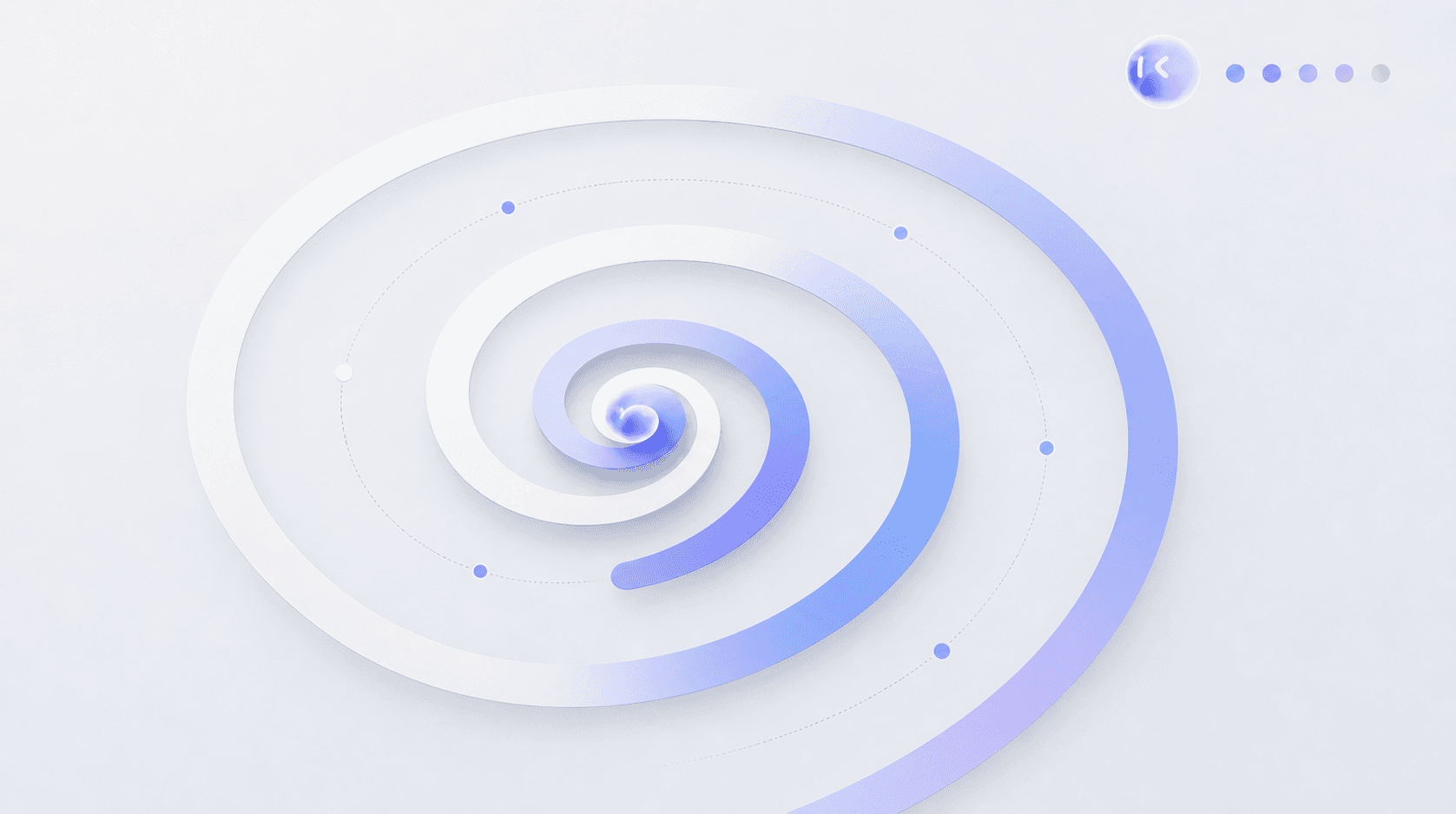
The criticism follows directly from that overhead. Running risk analysis on every loop takes specialized expertise and cost a small project cannot absorb, which is why lighter models exist for smaller teams.
The Agile Model
Agile compresses the same seven phases into short, repeating cycles, usually one-to-four-week sprints, instead of running them once in sequence. Each sprint touches planning, requirements, design, development, and testing in miniature, so a team ships a working increment at the end of every cycle instead of waiting for one final release. That structure absorbs changing requirements far better than waterfall: a client pivot in sprint three costs a reordered backlog, not a restart. The tradeoff is predictability. Fixed-scope stakeholders lose the certainty of a locked budget and end date, since scope is expected to shift as the backlog evolves. Agile also depends on a self-organizing team; without discipline around backlog grooming and sprint reviews, the lighter process gets mistaken for no process at all.
Rapid Application Development And Lean Models
Rapid Application Development skips extensive upfront planning in favor of building prototypes fast, putting them in front of users, and revising based on what comes back. Lean borrows its logic from manufacturing: cut anything that does not add value, whether unnecessary documentation, idle handoffs, or features nobody asked for. Both bet that speed and minimal overhead beat exhaustive process when the goal is getting something real in front of people quickly.
Both models fit best on small teams with fuzzy requirements, where a working prototype teaches more than another planning session. The limitation is people, not process: RAD and lean depend on skilled, self-directed teams, and the light governance that makes them fast on a small team turns into chaos across a large one.
The Big Bang Model
The big bang model skips planning almost entirely. Developers start writing code with whatever budget and resources are on hand, and requirements get figured out as work progresses instead of before it starts.
That works for a weekend prototype where nobody depends on the outcome. It falls apart once a stakeholder, deadline, or budget enters the picture, since no phase gate catches a wrong turn before it becomes the whole project. Of every model here, big bang carries the highest risk and the narrowest use case: throwaway prototypes, not production software.
How To Choose The Right SDLC Model For Your Project
Match your project against these factors before picking a model.
- Requirement stability: locked scope fits waterfall or the V-model; shifting scope fits agile or iterative approaches.
- Project size: small teams with fuzzy scope suit RAD or agile; large multi-team builds need the structure waterfall, the V-model, or spiral provide.
- Regulatory constraints: medical, aviation, or financial systems favor the V-model or spiral for gate based risk analysis.
- Timeline pressure: fixed deadlines suit waterfall; moving deadlines suit agile or incremental delivery.
- Team experience: agile rewards self direction; less experienced teams often move faster inside waterfall's defined gates.
Many teams blend models, running waterfall planning atop agile sprints, trading rigid structure for coordination overhead between fixed plans and shifting backlogs.
Common Mistakes Teams Make With SDLC Models
Teams pick a model because it is popular, not because it fits. Agile gets chosen for a compliance heavy build that actually needs the V-model's paper trail. Waterfall gets chosen for a startup feature nobody can specify yet.
- Skipping requirements under deadline pressure. Cutting this phase short almost guarantees a rewrite later, at far greater cost than if it were caught early.
- Treating documentation as optional in agile. A lighter process gets misread as no process, until a defect needs tracing back to its source.
- Never revisiting the model choice. A model that fit at kickoff can stop fitting once scope grows or the team doubles in size.
Embedding Security And Testing Into Any SDLC Model
Shift-left testing means pulling security review and testing into earlier SDLC phases instead of holding them for a final checkpoint. Waterfall threat models during design. Agile folds checks into every sprint as part of quality. Iterative models test each pass before the next cycle builds on it.
A few habits define shift-left in practice:
- Threat modeling during design: mapping attack surfaces before a penetration test flags them.
- Automated regression testing: catching breakage the moment new code touches existing functionality.
- Continuous testing in CI/CD: flagging defects within minutes of a commit.
Per IBM's published research on defect costs, fixing a defect gets more expensive the later it's found, with some analyses putting the multiplier well into the double digits depending on severity.
How Minitap Fits Into Any SDLC Model's Testing Phase
Whether the process is waterfall's single testing gate, the V-model's paired verification steps, or agile's QA automation for mobile teams baked into every sprint, the same complexity piles up once code reaches that phase: mobile, web, TV, browsers, physical devices, geography, CMS content, and feature flags all shift what counts as a passing test. The model changes when testing happens. It never changes what testing has to cover.
Minitap operates as an AI QA employee inside that phase, embodying the principles of agentic AI testing. It connects to a team's specs, tickets, code, and prior test runs, builds an understanding of what should be tested, and runs full regression across that surface. A cycle that once took a QA team of four to five people roughly three days now runs in about one hour, with each pull request adding only 1 to 2 hours of setup instead of a fresh manual pass.
Minitap's mobile-use agent achieved state of the art results on AndroidWorld, a recognized academic benchmark for autonomous agents on real mobile tasks, solving 100% of the task suite tested. When a test hits a blocker or an ambiguous case, Minitap surfaces it with context and recommends the next action instead of skipping it silently. Every run ships a session trace, screenshots, and written findings, so the testing phase stays fast without giving up auditability, no matter which SDLC model a team runs on top of it.
FAQ
What SDLC model works best for a team shipping mobile apps on a tight release cadence?
Agile fits best for teams shipping mobile apps frequently, since its short sprint cycles absorb requirement changes and put working software in front of users every one to four weeks instead of waiting for a single final release. Minitap runs full regression across iOS, Android, web, and browsers in about one hour, so the testing phase inside each sprint never becomes the bottleneck that slows the release cadence down.
How is Minitap different from scripted test automation tools like Appium or Maestro?
Minitap is an autonomous QA agent, not a script runner: it connects to a team's specs, tickets, and code to understand what the product should do, then decides what to test and executes across real interfaces without anyone authoring a test script. Scripted frameworks like Appium and Maestro require engineers to write every test case and rewrite selectors whenever the UI changes, so the maintenance burden grows in lockstep with the app. Minitap adapts automatically when the UI changes, so the testing phase inside any SDLC model keeps pace with releases instead of falling behind on suite upkeep.
How do teams apply shift-left testing inside an agile sprint without slowing development down?
Shift-left testing in agile means pulling threat modeling into design and running automated regression the moment new code touches existing functionality, instead of holding checks for a final sprint gate. In practice, teams pair test case development with each user story and run regression in CI on every pull request instead of waiting for a dedicated test phase at the end. Minitap covers the regression execution side of this automatically: it identifies the tests affected by each pull request, runs them against real interfaces and devices, and delivers a session trace, screenshots, and written findings, adding only 1 to 2 hours of setup per pull request instead of a fresh manual pass.
How does an autonomous QA agent like Minitap actually decide what to test?
Minitap decides what to test by connecting to a team's specs, tickets, code, and prior test runs, then building an understanding of expected product behavior instead of following a fixed script. From that understanding, it generates and maintains the test cases relevant to a release, executes them across real interfaces and devices, and investigates any failure beyond the originally scoped steps. For teams running agile or iterative SDLC models, that means the testing phase adapts to what actually changed in that cycle instead of running a static suite that drifts further from the product with every release.
What does it actually cost to catch a software defect late in the SDLC?
A defect caught during requirements or design review costs a conversation. The same defect reaching production can trigger uninstall rate spikes, App Store rating drops, and 1-star reviews citing the exact broken flow before the team knows a regression shipped. As covered above, defect cost multiplies sharply the later a flaw is found. Minitap runs full regression in about one hour, surfacing defects before release regardless of platform complexity.
Can a team run full regression across mobile, web, and TV without a large QA staff?
Yes. Minitap operates as an AI QA employee that connects to a team's specs, tickets, code, and prior test runs, and executes regression across mobile, web, TV, browsers, physical devices, geography, CMS content, and feature flags without anyone writing or maintaining test scripts. A cycle that once took a QA team of four to five people about three days now runs in roughly one hour, with each pull request adding only 1 to 2 hours of setup instead of a fresh manual pass.
Final Thoughts On Finding The Right SDLC Model
Match the model to your team's size, scope, and appetite for change, and the framework stops being a guess. Whatever model you run, the testing phase still has to catch defects across mobile, web, TV, and physical devices before your users do. Try Minitap to run that full regression cycle in about an hour, giving every SDLC model's testing phase the speed it needs to keep up.