
You've read that AI is rewriting the software development lifecycle, but most of what teams call AI-native is just a faster version of the old process. The real shift moves humans from writing code to reviewing it, and it changes what testing has to catch and when. Here's what actually restructures across planning, coding, and testing, and why the testing phase becomes the one everyone else waits on.
TLDR:
- AI-native SDLC moves AI into the implementation role: it writes code and tests, humans validate.
- AWS's AI-DLC runs agents through sandboxed coding, auto PRs, and staged promotion on real gates.
- Cory Hymel's V-Bounce model redistributes human effort toward requirements and continuous validation.
- Roughly 90% of organizations now use AI in development, up 14 points year over year (2025 DORA report).
- Minitap acts as an AI QA employee that authors, runs, and maintains regression tests across mobile, web, and device complexity without engineers touching the suite.
What Is an AI-Native Software Development Lifecycle
An AI-native software development lifecycle is built from the ground up with AI as an active participant in planning, design, coding, testing, and deployment, not a traditional SDLC with a coding assistant bolted onto one stage.
Most teams today run AI-assisted development: a human owns every phase, and AI just speeds up the typing. An AI-native SDLC changes who does the implementing. Humans write requirements, review architecture, and validate outputs. AI writes the code, generates the tests, and often proposes the design options first. The shift from scripted tests to autonomous QA agents mirrors this same structural change. The Cory Hymel paper that introduced this idea frames it precisely: AI becomes the implementation engine, with humans shifting toward validators and verifiers, touching every phase instead of just coding.
AI-Native SDLC Versus AI-Assisted and Traditional SDLC
Three models exist here, and confusing them is how most "AI SDLC" conversations go sideways.
Traditional SDLC runs on discrete phases owned by discrete roles: PMs write requirements, architects design, engineers build, QA verifies, ops watches. Each handoff adds a review gate.
AI-in-SDLC keeps that structure but speeds up tasks inside each phase. Coding assistants help developers write faster; AI drafts test cases. Phases, gates, and roles stay put, and the approval gates built for a slower process still stall the throughput agentic coding should unlock.
AI-native SDLC restructures the work. Planning, coding, and testing compress into tighter loops, with AI producing first drafts of code, tests, and architecture options while humans shift to reviewing and validating them, a pattern reinforced by shift left testing in DevOps workflows. That is a structural change, not a speed boost.
| Model | Who implements | Phases and gates | Nature of the change |
|---|---|---|---|
| Traditional SDLC | Humans: PMs write requirements, architects design, engineers build, QA verifies | Discrete phases, each handoff adds a review gate | No change: baseline process |
| AI-in-SDLC (AI-assisted) | Humans implement, AI speeds up tasks inside each phase (coding assistants, drafted test cases) | Same phases, gates, and roles stay in place | Speed boost, not restructuring |
| AI-native SDLC | AI produces first drafts of code, tests, and architecture; humans review and validate | Planning, coding, and testing compress into tighter loops | Structural change to who does the work |
The AI-Driven Development Lifecycle (AI-DLC) Method
AWS gave this idea a name and a concrete implementation: the AI-Driven Development Lifecycle, or AI-DLC.
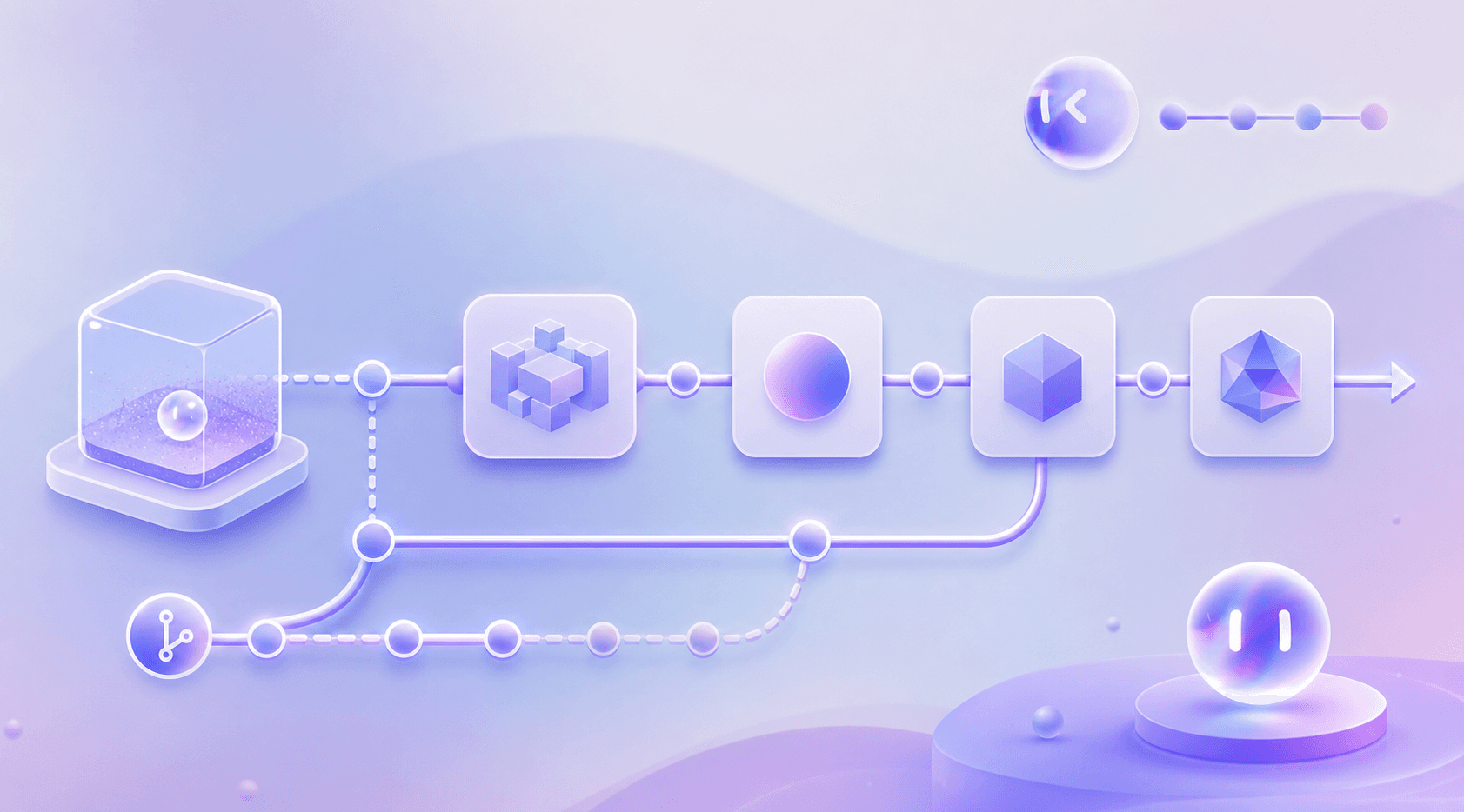
The method follows a set sequence. An agent picks up a task inside an isolated sandbox, writes the code, and pushes changes to version control on its own, raising the question of AI coding agents and automated testing verification. It opens a pull request automatically, no human required to draft the summary. A preview environment spins up per PR so reviewers see the change running before merge. Once approved, the change promotes through staging and production through the same gates a human-authored change would pass through.
AWS open sourced the adaptive workflows behind AI-DLC, so teams can inspect the orchestration logic instead of treating it as a black box.
The V-Bounce Model and Academic Research Behind AI-Native SDLC
The academic groundwork for this idea comes from Cory Hymel's paper, "The AI-Native Software Development Lifecycle: A Theoretical and Practical New Methodology," published on arXiv as a downloadable PDF. It names the model at the center of this shift: V-Bounce, an adaptation of the traditional V-model that pairs each development stage with a testing stage on the opposite leg. Since AI compresses implementation time, V-Bounce redistributes effort toward requirements gathering, architecture design, and continuous validation, closing vibe coding quality gaps that surface when generation speed outpaces review. Its central claim: humans move from implementers to validators, while AI writes the code itself.
How AI Changes Each Phase of the SDLC
Six phases, six changes. Here is what actually changes at each one.
- Planning and requirements: AI reads tickets, transcripts, and specs to draft user stories and flag conflicting requirements before anyone starts building. A vague acceptance criterion gets caught here instead of in a standup three weeks later.
- Design and architecture: AI proposes system diagrams and API contracts based on similar patterns in the codebase, giving architects a starting draft to critique instead of a blank page.
- Coding: implementation moves from human typed to AI generated, with agents writing full features from a spec while a developer reviews the diff and adjusts direction.
- Testing: AI generates test cases straight from requirements and runs them across paths a human reviewer would not check first.
- Deployment: agents open pull requests, spin up preview environments per PR, and promote changes through staging once checks pass, following the pattern AWS built into AI-DLC.
- Maintenance: AI monitors rollout metrics after release and flags anomalies for a human to confirm before they become incidents.
AI SDLC Frameworks, Reference Architectures, and GitHub Examples
A concrete AI SDLC framework looks less like a diagram and more like a repository you can clone.
The pattern holds across implementations: an agent works inside an isolated sandbox, commits changes to version control, and opens a pull request without a human drafting the summary first. A preview environment builds automatically off that PR, so a reviewer sees the running change before approving anything. Once merged, the change promotes through staging and production using the same gates a human authored commit would pass through.
AWS's aidlc-workflows repository on GitHub is publicly available for teams to inspect, with branches and workflow definitions engineers can read directly instead of inferring from a blog post.
AI SDLC Tools and Agents by Category
The tools sort by function, not brand. Four categories cover most of what teams deploy today.
- Coding assistants and agents: the implementation layer. Assistants autocomplete inside an editor; agents take a spec, plan a sequence of edits across files, and execute without a prompt for every step.
- Requirements and design tools: AI drafts user stories from tickets or transcripts, and proposes architecture diagrams or API contracts based on similar patterns already in the codebase.
- Test authorship and execution agents: AI generates test cases from requirements, executes them, and investigates failures instead of stopping at a pass or fail output.
- CI/CD and release tooling: agents open pull requests, spin up preview environments, and promote changes through staging and production gates without a human drafting each step.
What separates an SDLC AI agent from a single-purpose copilot is scope. A copilot autocompletes the next line. An agent plans a multi-step task, acts on it across files or systems, and adjusts course when something in the environment changes, closer to a teammate working a ticket than a tool finishing a sentence.
Benefits of Adopting an AI-Native SDLC
The upside is not theoretical anymore. Adoption has crossed the tipping point: roughly 90% of organizations have adopted AI in their software development processes, a 14 point jump year over year, according to the 2025 DORA report on AI adoption. That wave includes AI QA testing specifically, following the same trajectory. The question is no longer whether to adopt, but how fast a team restructures to benefit.
The payoff shows up in where time goes. Cycle times compress once AI handles first drafts of code and tests, freeing senior engineers for architecture decisions, edge case review, and validation, though keeping testing in step with code generation remains the key challenge.
Risks and Governance Challenges in AI-Native Development
Restructuring who does the work doesn't remove the risk, it relocates it. The clearest governance gap is approval authority: when an agent opens its own pull request and spins up its own preview environment, someone still has to decide whether a human sign-off is required before that change reaches production, and skipping that step under velocity pressure is how a plausible-looking diff ships with a logic error the tests never caught. Security review carries a similar gap. Code that passes every functional test can still grant a service account overly broad permissions or skip input validation on a new endpoint, the kind of issue a security-focused review catches and a pass or fail test suite does not.
Traceability is the next pressure point. Compliance-bound teams need to know whether a given change came from a human commit or an agent's PR, and without that record, audits and incident postmortems stall on a question the pipeline should already answer. There's a related access question: agents that read specs, tickets, and proprietary source to generate changes need scoped, auditable permissions, not broad repository access granted once during setup and never revisited. None of this argues against restructuring the SDLC around AI, it argues for building the review gates, sign-off rules, and access controls into the workflow from the start instead of retrofitting them after something ships broken.
Building AI SDLC Skills and Certification Paths
The skills that matter are moving from typing code to judging it: reviewing AI generated diffs, catching when an architecture solves the wrong problem, and writing prompts specific enough for a usable first draft. QA follows the same path, spending less time authoring scripts and more time on context engineering for agents and tests to confirm coverage actually maps to the requirement it claims to satisfy.
Certification is catching up, slowly. ISTQB's CT-AI, an Advanced level certification requiring an active Foundation certificate first, needs 30 to 40 hours of study covering how to test AI based systems and how to use AI to support testing. Without Foundation, that is the first stop.
Beyond certification, teams build this judgment fastest by working directly with agents inside real regression cycles, questioning coverage and correcting assumptions.
Where Testing Fits Into an AI-Native SDLC
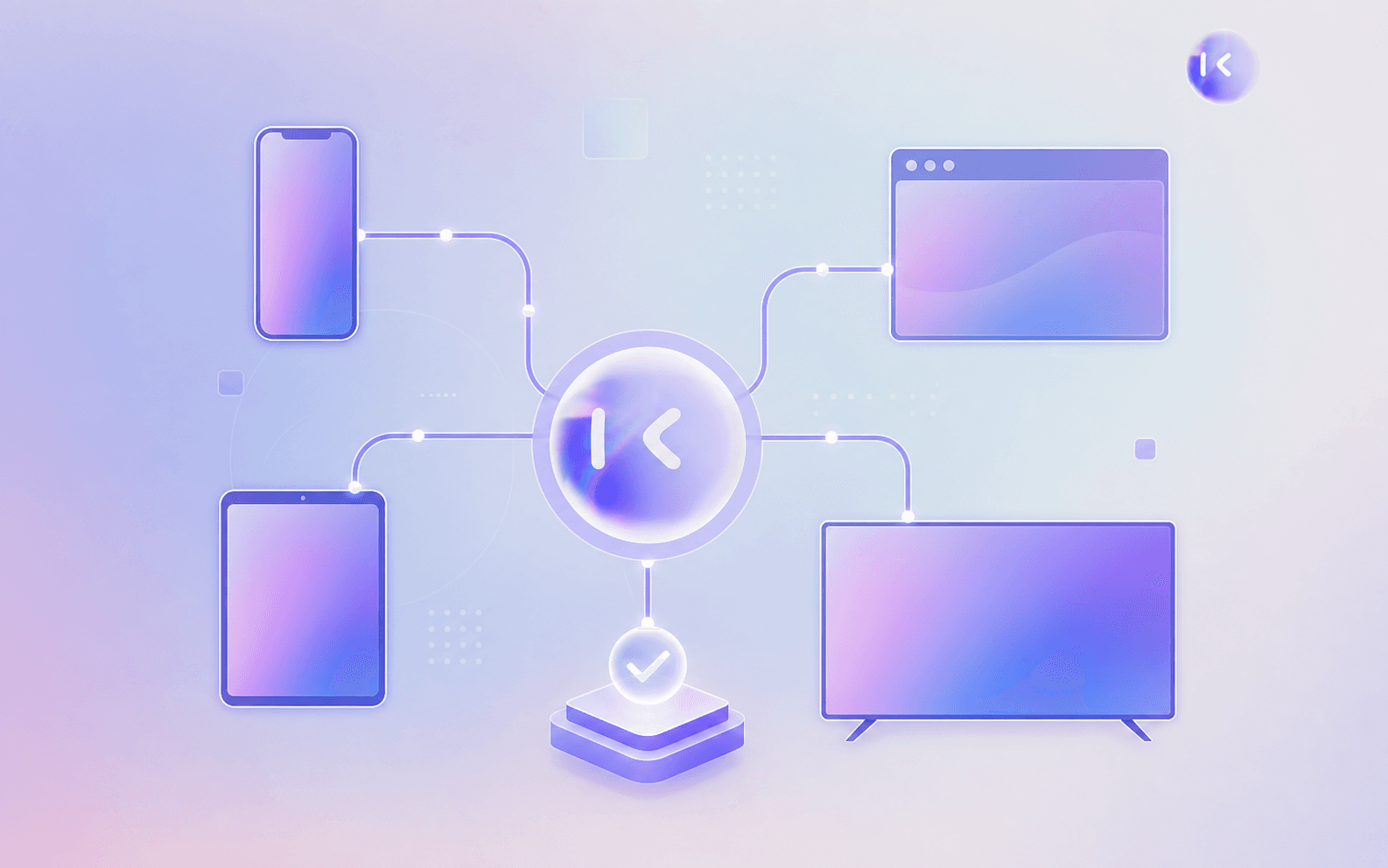
Testing is the bottleneck every other compressed phase depends on. Planning and code ship faster, but AI mobile app testing across mobile, web, TV, browsers, and physical devices still has to account for feature flags, CMS content, and geography before a release is trustworthy.
Minitap operates as an AI QA employee inside that phase, reading specs, tickets, and code to author, run, and maintain regression tests across that complexity without engineers touching the suite. On AndroidWorld, an academic benchmark built from 116 tasks across 20 real-world Android apps, Minitap's mobile-use agent scored 100%.
That matters for enterprise teams whose Android regression can take roughly three days with four to five QA engineers. Compressing that into about an hour is the most impactful change in an AI-native SDLC.
FAQ
How can engineering teams stop regression testing from becoming the bottleneck in an AI-native SDLC?
Minitap removes regression testing as the bottleneck by acting as an AI QA employee that reads specs, tickets, and code to author, run, and maintain regression tests without engineers touching the suite. It executes across mobile, web, TV, browsers, and physical devices, and compresses regression cycles that typically take a QA team of four to five people roughly three days down to about an hour, so verification keeps pace with the planning and coding phases that compress ahead of it. That keeps release cadence intact instead of stalling every AI-accelerated phase behind manual QA capacity.
How does an autonomous QA agent like Minitap reduce the engineering time spent maintaining regression tests?
Minitap reduces regression-test maintenance by adapting automatically to UI changes instead of relying on the selector-based scripts that break every time an interface updates. Rather than executing predefined steps, it reads the product from specs, tickets, and code, decides what needs testing, and keeps that coverage current on its own, so engineers stop rewriting Appium- or Maestro-style selectors after every release. That shifts QA capacity away from repetitive suite upkeep and toward judgment-heavy review work.
Can Minitap test both mobile and web user journeys in a single regression run?
Minitap tests both mobile and web user journeys using the same vision-based, black-box approach, with mobile (iOS and Android) as the primary focus and web as a strong secondary platform. It validates real user journeys through the actual interface rather than internal code paths, so a single regression campaign can cover a flow like checkout across iOS, Android, and web without maintaining a separate script suite per platform. For teams juggling multiple platforms alongside browsers and devices, that means one regression process instead of parallel, platform-specific test suites.
How is an autonomous QA agent like Minitap different from script-based test automation tools such as Appium or Maestro?
Minitap differs from script-based tools like Appium and Maestro because it understands the product and decides what to test instead of executing only the predefined steps a script contains. Traditional automation assumes stable conditions and breaks when the UI changes, requiring engineers to rewrite selectors and maintain the suite; Minitap reasons across changing conditions, investigates unexpected behavior beyond the initial test scope, and produces evidence and recommended next actions rather than a plain pass or fail result. That difference matters most in AI-native SDLCs, where code and tests ship faster than a static script suite can keep up with.
How does Minitap give engineering teams an audit trail for QA decisions in an AI-native SDLC?
Minitap produces evidence, root-cause analysis, and actionable bug reports for every test it runs instead of a plain pass or fail result, and it communicates those findings inside the team's existing workflow, such as Jira or Slack. That gives compliance-bound teams a record of what was tested and why, closing the traceability gap that opens up once coding and deployment start running through agent-authored pull requests.
Final Thoughts on Making AI a Core Part of Your Development Process
Getting AI into planning, coding, and deployment is only half the picture. Your release still needs regression testing that moves as fast as the code does, across every device and browser that matters. Minitap handles exactly that, compressing multi-day regression into about an hour.