
You're coordinating another regression run across iOS, Android, and web while engineers update tests for the latest UI changes. Detox helps actions happen at the right time, but coverage and upkeep stay with your team. Minitap, an AI QA employee, takes on that work: it reads your specs, tickets, and existing tests, writes and runs scenarios on real interfaces, and proposes test updates when the app changes. The comparison comes down to what leaves your backlog, not simply how reliably a scripted step runs.
TLDR:
- Your engineers write and maintain Detox testing scripts as React Native screens change.
- Detox waits for app idleness before acting. Your team still owns regression coordination.
- Test checkout across mobile and web, including geography, CMS content, and feature flags.
- Minitap's AI QA employee writes and runs regression scenarios on web and mobile, and proposes test updates your team reviews.
What Is Detox for React Native Testing?
Your engineers own test authorship and maintenance with Detox, an open-source gray-box framework maintained by Wix for React Native E2E testing. The source code is available in the Wix Detox repository.
Detox uses JavaScript or TypeScript test scripts and automatic app synchronization. It monitors native app activity and waits for idleness before taking the next action, reducing timing-related flakiness. According to the Detox getting started guide, tests run on a real device or simulator.
That synchronization is the core distinction in Detox testing: the framework handles waiting for the app, while your team remains responsible for keeping scripts current as the product changes.
What Is Minitap?
Minitap is an AI QA employee that compresses multi-day regression on web and mobile. It builds an understanding of the product from your specs, tickets, documentation, and existing test cases, writes scenarios with acceptance criteria, and runs them as black-box visual tests.
Minitap covers web, iOS, Android, and Android TV apps, and accounts for geography, CMS content, and feature flags. When testing is blocked, it explains what stopped the run and recommends the next action, giving your team evidence and a clear path forward.
Test Authorship and Maintenance
For React Native E2E testing, the ownership question comes first: who maintains coverage when screens change?
Detox: Script Authorship and TestID Maintenance
Engineers write JavaScript/TypeScript tests. Detox's test ID guidance recommends unique testID props for stable matching, but doesn't require them.
New screens need scripted coverage. UI changes can require identifier and assertion updates. Synchronization reduces timing-related flakiness, but engineers still own maintenance.
Minitap: Test Authorship and Proposed Updates
Minitap writes scenarios in plain words from your PRDs, tickets, and existing tests, without testIDs or selectors. When the app changes, Minitap proposes updates to its tests and asks your team to review only the changes it cannot settle on its own.
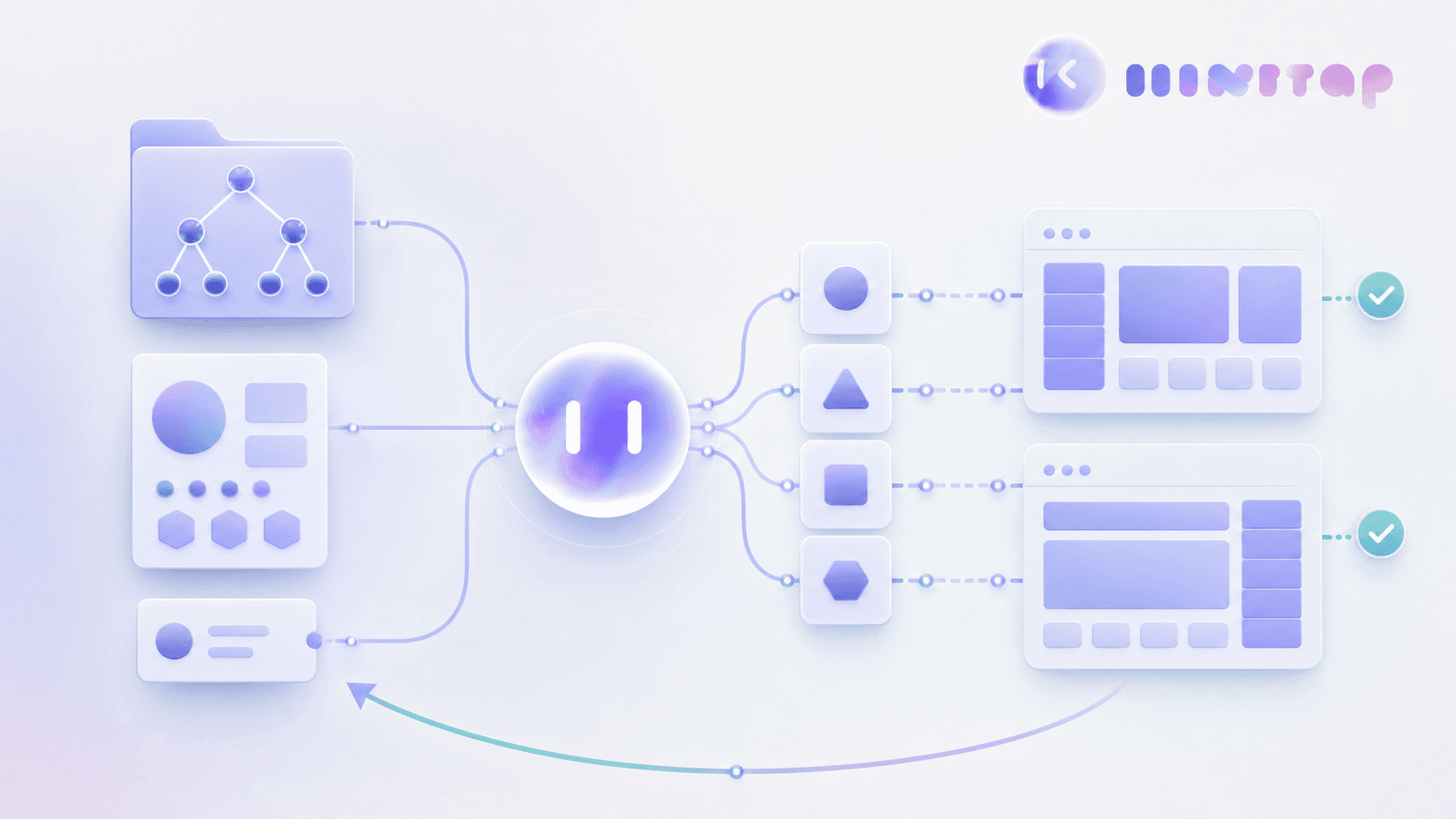
When a ticket changes expected checkout behavior but an older specification remains unchanged, Minitap surfaces the inconsistency. It also identifies gaps between existing tests and required regression coverage.
Platform and Device Coverage
With Detox testing, your team maintains scripts and configuration-specific expectations. Minitap takes that work on across app surfaces and release configurations.
Detox: React Native and Device/Simulator Scope
Detox is built for React Native mobile apps. Its gray-box monitoring tracks internal activity to time actions. A third-party setup complexity comparison rates setup as moderate compared with Maestro's black-box approach.
Web testing is not documented in Detox's guides, so teams often turn to tools like Playwright for web testing for the web side. Your team encodes geography, CMS state, and feature-flag expectations.
Minitap: Mobile, Web, and Real-World Configuration Coverage
Minitap uses vision-based, black-box testing through actual web, iOS, Android, and Android TV interfaces, extending beyond browser-only frameworks like Cypress testing.

| Coverage question | Minitap's approach |
|---|---|
| Does checkout work across mobile and web? | One agent validates both surfaces. |
| Which result applies? | The agent reasons across geography, environment, app version, CMS state, and feature flags. |
That gives React Native teams configuration-aware validation across the journey they ship. BrowserStack provides device-cloud infrastructure; that infrastructure alone does not determine expected behavior across geography, CMS state, and feature flags. Minitap handles that configuration-aware test reasoning.
Regression Testing at Enterprise Scale
For enterprise teams, detox testing leaves regression scope and campaign coordination with engineers, even when individual runs are reliable.
Detox: Flakiness Reduction Within a Test Run
Detox's own flakiness documentation describes its focus on flaky tests. For broader industry context, an ACM literature survey cites a developer survey in which 59% of developers reported flaky tests monthly, weekly, or daily. That figure concerns flaky tests generally, not Detox or React Native users in particular.
Teams still coordinate device and configuration combinations and use separate browser tooling, work that otherwise falls to manual QA testing.
Minitap: Compressing Multi-Day Regression
A typical enterprise pattern: a multi-day Android or iOS regression with a small QA team, plus extra hours of setup on every release.
Minitap is the AI QA employee built to compress that multi-day work, speeding up regression testing for mobile apps. It identifies release-affected tests, executes across enterprise configurations, and investigates deviations beyond predefined steps. Every run comes with a video and written findings, so the work stays reviewable.
Where Minitap Fits Best
With Detox testing, your team owns test authorship and ongoing maintenance. Every new React Native flow adds scripts to write; every UI change can bring selectors to repair. Feature delivery and test upkeep compete for the same engineering time.
That is the work Minitap takes on when you hand Minitap the full regression. Built as an AI QA employee, Minitap writes and runs scenarios across mobile and web journeys and the configuration variables your product ships with, and proposes test updates your team reviews. For teams seeking a Detox alternative, the difference is who does the repetitive work: keeping coverage current stops being another engineering assignment.
FAQs About Detox, Minitap, and React Native E2E Testing
What is the best Detox alternative for React Native teams that don't want to maintain test scripts?
Minitap fits React Native teams that want to stop writing and repairing test scripts. Its AI QA employee reads product specifications, tickets, and existing tests to determine expected behavior, writes scenarios, and proposes coverage updates as the product changes. For a checkout change, that means identifying affected tests and validating the journey through actual iOS, Android, and web interfaces, accounting for geography, CMS content, and feature flags. A video of every run and written findings keep the work reviewable, and when testing is blocked, Minitap explains why and recommends the next action.
How is Minitap different from Detox for React Native E2E testing?
Your engineers write and maintain Detox scripts. Minitap writes and runs scenarios, proposes test updates when the app changes, delivers evidence-backed findings, and recommends next actions when testing is blocked.
What does gray-box testing mean in mobile QA?
Gray-box testing combines interface interactions with internal app state access. Detox uses that access to wait for app idleness before acting. That internal signal helps prevent actions during unfinished animations or network requests, while black-box approaches rely on observable interface readiness instead of internal activity.
Final thoughts on Test Maintenance Beyond Detox
You need coverage without another backlog. Minitap writes and runs your tests and proposes updates as your app changes. See how Minitap takes repetitive regression work out of your next release.
FAQ
When should you move from Detox to Minitap if your regression cycle takes days?
Detox leaves test authorship, maintenance, and regression coordination with your engineers. Minitap writes and runs the regression scenarios and proposes updates your team reviews. Detox serves React Native teams running engineer-written JavaScript or TypeScript suites, while Minitap fits teams whose releases span mobile, web, geography, CMS content, and feature flags. Compare full regression completion and engineering hours spent per release, not individual test speed.
Can Minitap reduce your test maintenance if Detox already handles app synchronization?
Yes. Detox synchronization reduces timing-related flakiness, but your engineers still update scripts, identifiers, and assertions when flows change. Minitap reads specifications, tickets, and existing tests, tests through the actual interface without selectors, and proposes test updates when flows change.
How do you start moving regression coverage from Detox to Minitap?
Start with a critical journey, such as checkout, and provide the relevant product specifications, tickets, existing test cases (CSV or Excel work), and configuration expectations. Minitap uses that context to write and run scenarios; compare its run videos and written findings against your release requirements before expanding the campaign. Treat the transition as a coverage check, not a line-by-line conversion of Detox scripts.
How can you review Minitap results when a regression run is blocked?
Minitap explains what stopped testing, provides context, and recommends the next action instead of silently skipping the affected journey. Use the run video and written findings to understand the affected coverage and the proposed next step. See how Minitap works for your team.