

Trying to figure out what a QA developer actually does before you apply, or before you decide if the title fits what you're already doing? The job postings won't tell you, since QA developer, SDET, and manual tester blur together depending on who's hiring. We'll sort out where those roles actually diverge, what skills and tools employers expect, and how AI is starting to change what the day to day work looks like.
TLDR:
- A QA developer writes automated checks and probes edge cases before code reaches customers.
- Core tools span Python, JavaScript, or Java plus Selenium, Appium, Maestro, or Playwright.
- Enterprise regression across web, iOS, Android, and Android TV can mean a multi-day regression with a small QA team, plus extra hours of setup on every release.
- 89% of organizations are piloting or deploying generative AI in quality engineering, per Capgemini.
- Minitap reads specs, tickets, documentation, and existing test cases to decide what needs testing, and runs it as black-box visual scenarios.
What Is a QA Developer?
A QA developer verifies that an application behaves as intended before it reaches a customer, writing automated checks and digging into edge cases nobody thought to spec.
Job postings use QA developer, QA engineer, SDET, and manual tester almost interchangeably, but coding scope differs. A QA developer typically writes test scripts, automation frameworks, or small tools. An SDET carries heavier engineering duties, building test infrastructure alongside developers. A manual tester runs test cases by hand without writing code. Titles blur in practice, so a company's actual expectations matter more than the label.
QA exists outside software too: game QA checks playability and platform certification, manufacturing QA inspects physical parts. This piece stays scoped to software QA developers, the people verifying code.
QA Developer Job Description and Core Responsibilities
A typical QA developer job description reads like a checklist of overlapping duties instead of one clean function. Expect to see most of the following:
- Writing and maintaining automated test scripts across unit, integration, and end to end layers
- Designing test cases from product requirements and acceptance criteria
- Executing regression suites before every release to catch breakage in existing features
- Logging defects with reproduction steps, severity, and affected environment
- Triaging bug backlogs alongside engineering and product to decide what ships and what blocks
- Digging into root cause analysis when a defect surfaces, beyond confirming it exists
Duty distribution depends on company size. At a small startup, one QA developer might write the automation framework, run manual checks on a new feature, and file the bug report in the same afternoon. There is no room for specialization when the team is five engineers and one tester.
At a larger org, the role tends to split. Manual QA handles exploratory and usability checks, automation engineers own the script suite, and SDETs build the infrastructure both groups rely on. An enterprise job posting often names only a slice of this work, so ask during the interview which part of the pipeline you would actually own.
QA Developer vs Software Developer: Where the Roles Overlap and Diverge
Software developers build the feature. QA developers verify it does what the ticket said it would, then probe paths the ticket never mentioned. A QA developer writing test scripts, test scaffolding, and small automation tools is doing engineering work aimed at breaking things instead of shipping them, and the closer that work looks like writing code, the closer the two roles sit on an org chart.
Developer to QA ratios vary by company stage and how much testing gets automated versus done by hand. A startup under roughly five people often skips dedicated QA entirely. Past a team of roughly ten people with faster release cadence, dedicated QA typically becomes harder to skip, even as shift left practices shrink the headcount needed per release.
That feeds a real debate: separate title, or shared responsibility baked into every developer's job. Regulatory or platform complexity tends to keep the title distinct. What matters is whether whoever writes the test knows the product as well as whoever wrote the feature.
Skills and Tools Every QA Developer Needs
Employers benchmark QA developer candidates against a fairly consistent technical stack.
Technical skills
- Proficiency in at least one scripting or programming language (Python, JavaScript, or Java are most common)
- Automation framework experience: Selenium, Appium, Maestro, or Playwright, depending on whether the target is web or mobile
- API testing tools like Postman for verifying backend responses independent of the UI
- Version control fluency (Git) and comfort working inside CI systems, since automated suites now run on every commit or pull request
Framework choice tends to split by platform: Selenium and Playwright dominate web testing, while Appium and Maestro cover mobile.
Soft skills
Technical range alone does not make a strong QA developer. What separates a script runner from someone a team trusts with release decisions:
- Attention to detail, catching the edge case a spec never mentioned
- Written communication clear enough that a bug report needs no follow up questions to reproduce
- Critical thinking to interpret ambiguous or conflicting requirements before writing a single test case
- Cross-team collaboration with developers and product to negotiate what actually blocks a release versus what can ship with a known issue
A hiring rubric that only tests scripting ability misses half the job. The strongest candidates explain how they automated a check and why that check mattered.
Software Quality Assurance Standards and Testing Methodologies
Software QA sits on standards, not personal preference. ISO/IEC 25010 defines the quality characteristics a product gets measured against: functionality, reliability, usability, performance, security, and maintainability. A QA developer testing a checkout flow checks whether it holds up under load, whether an unfamiliar user can complete it without confusion, and whether it responds fast enough to hold attention. IEEE 829 covers documentation: test plans, test case specifications, and test summary reports that make what got tested and why traceable later.
Standard test levels build on each other through a release cycle. Unit tests verify a single function in isolation. Integration tests check that modules talk to each other correctly. System tests validate the whole application against requirements. Regression tests confirm new code has not broken something that used to work. User acceptance testing puts the build in front of real stakeholders before it ships.
Regression sits at a particular pressure point. A team shipping weekly cannot manually rerun its full suite every time without mobile QA automation becoming the release bottleneck.
Why Script Based Regression Testing Breaks Down at Enterprise Scale
Scripted automation solves the wrong problem once a product grows past a handful of features. A test written against a specific button selector or screen layout fails the moment a designer moves that button, for reasons that have nothing to do with a real defect. Someone has to notice the failure, confirm it is a UI change instead of a bug acceptance criteria misses, then rewrite the selector before the suite runs clean again. That maintenance tax scales with every release.
Enterprise mobile regression testing makes the bottleneck concrete. A team covering web, iOS, Android, and Android TV across several browsers, geographies, and CMS combinations often faces a multi-day regression with a small QA team, plus extra hours of setup on every release. Software defect research has shown production bugs take more time and resources to fix than the same defect caught earlier, with some analyses putting the cost multiplier at 10x or more depending on severity.

How AI Is Changing Software Testing
AI QA testing tools like self-healing locators adapt when a button moves or a label changes, absorbing UI churn that used to mean a broken selector and a stalled pipeline. Vision-based agents go further: instead of following a fixed script, they read a screen the way a person would, find the login field or the checkout button by what it looks like and where it sits, and adjust when the layout changes. Agentic testing pulls from product context, tickets, specs, and existing code to build test cases without someone hand writing every scenario first.
This is not a fringe experiment. Industry research found 89% of organizations are now piloting or deploying generative AI in quality engineering workflows, with 37% already in production and 52% still running pilots, according to a Capgemini press release. Only 15% have reached enterprise-wide scale, which tells you where most teams actually sit: past the pilot stage, still working out how to roll this across every product line and platform, the exact gap where the QA developer role is being rewritten.
How the QA Developer Role Is Evolving From Script Writer to AI Orchestrator
Script maintenance used to eat the majority of a QA developer's week: rewriting Selenium or Appium selectors after every UI change, rerunning the same regression suite across web, iOS, Android, and Android TV, and chasing down failures that turned out to be layout drift instead of a real defect. That work is what's shrinking first, not the judgment behind it. An AI QA employee that reads specs, tickets, documentation, and existing test cases can decide what needs testing, run it across platforms and configurations, and propose test updates when the app changes. What's left for the QA developer is the part scripts never handled well anyway: reviewing evidence and proposed updates, resolving ambiguity when a spec and the actual product disagree, and deciding what a failure means before it blocks a release. The title stays the same on the org chart, but the daily work underneath it looks closer to an orchestrator directing an AI teammate than a script writer waiting on the next full regression run.
| Work item | Traditional QA developer | QA developer with an AI QA employee |
|---|---|---|
| Test scripts | Writes and maintains Selenium/Appium/Maestro scripts, rewriting selectors after every UI change | Reviews the scenarios and test updates the AI QA employee proposes from specs, tickets, and documentation |
| Regression execution | Manually reruns suites across web, iOS, Android, and Android TV, often over several days | The AI QA employee runs the regression campaign across platforms and configurations |
| Failure triage | Chases down failures to determine layout drift versus a real defect | Reviews evidence (run video, written findings) the agent already produced |
| Ambiguity handling | Investigates blocked or unclear cases from scratch | Resolves ambiguity the agent surfaces with a recommended next action |
| Primary skill exercised | Script authorship and maintenance | Judgment: interpreting evidence and deciding what a failure means |
Minitap and the Next Generation QA Developer Role
Minitap is the clearest example of where this evolution lands. It works as an AI QA employee, reading a product's specs, tickets, documentation, existing test cases, and prior test runs to build an understanding of what the product should do. From there it decides what needs testing and runs it as black-box visual tests on web, iOS, Android, and Android TV, and proposes test updates when the app changes so the QA developer reviews only what it cannot settle on its own.
The day-to-day shift is concrete. A QA developer reviews the evidence Minitap produces: a video of each run and written findings, instead of rewriting selectors after a UI change or re-running regression by hand across iOS, Android, geography, and feature-flag combinations. When something is blocked or ambiguous, Minitap surfaces it with a recommended next action, and the QA developer resolves it instead of chasing down why a test failed, a shift covered further in AI QA for functional testers.
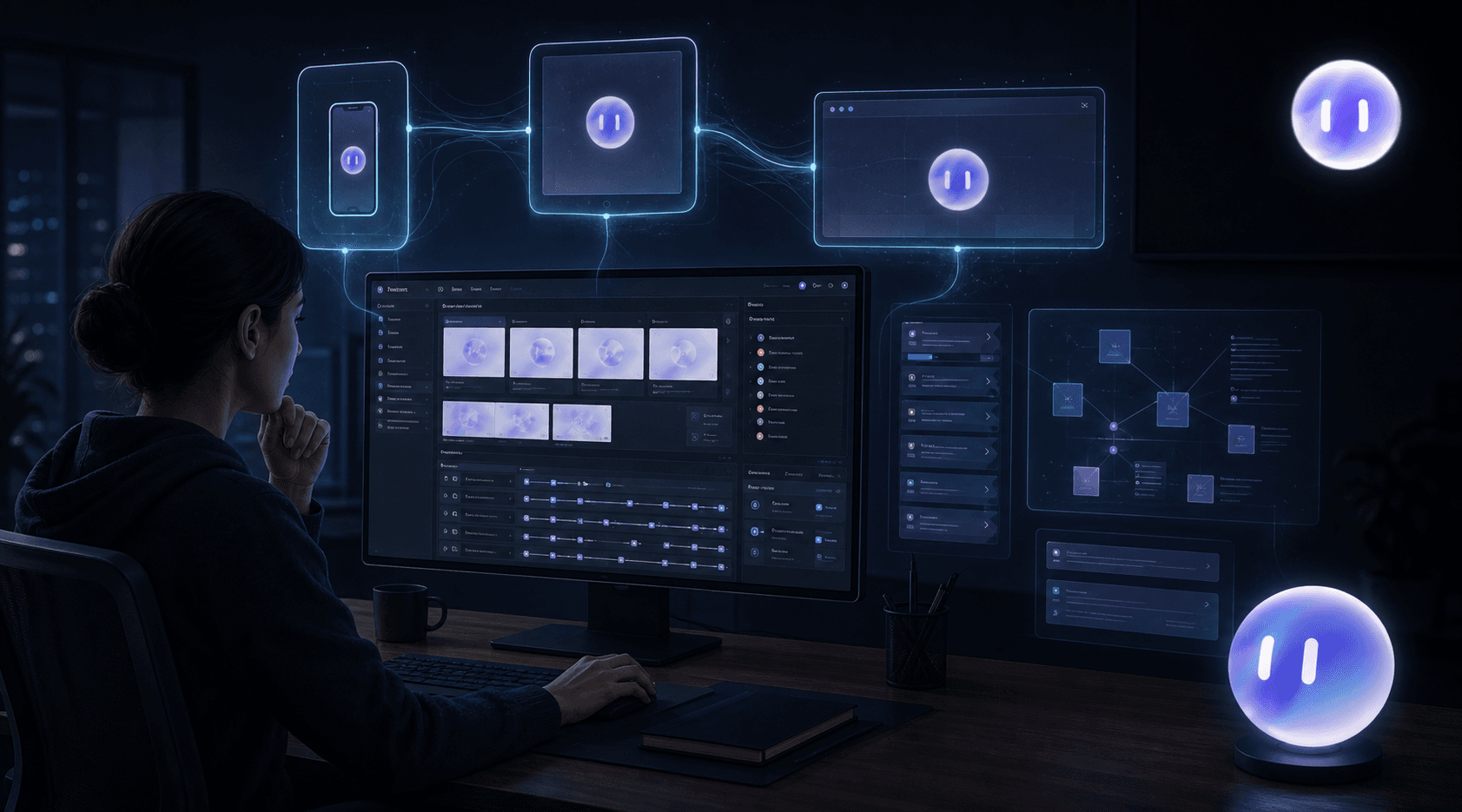
The work moves from maintaining scripts to reviewing judgment, evidence, and recommendations.
FAQ
What's the actual difference between a QA developer, an SDET, and a manual tester?
Coding scope is the dividing line. A QA developer writes test scripts, automation frameworks, or small tools. An SDET carries heavier engineering duties, building the test infrastructure other testers rely on. A manual tester runs test cases by hand without writing code. In practice the titles blur, so what a company actually expects you to own matters more than which label is on the job posting.
Why does script-based regression testing break down at enterprise scale?
A test written against a specific button selector or screen layout fails the moment a designer moves that button, for reasons that have nothing to do with a real defect. Someone has to notice the failure, confirm it's a UI change and not a bug, then rewrite the selector before the suite runs clean again, and that maintenance tax scales with every release. At enterprise scale, covering web, iOS, Android, and Android TV across several browsers, geographies, and CMS combinations, that often means a multi-day regression with a small QA team, plus extra hours of setup on every release.
How is AI actually changing what a QA developer does day to day?
Script maintenance is what's disappearing first, not the judgment behind it. Self-healing locators and vision-based agents absorb UI churn that used to mean a broken selector and a stalled pipeline, and agentic testing pulls from specs, tickets, and documentation to write scenarios without someone hand-writing every one. Per Capgemini, 89% of organizations are now piloting or deploying generative AI in quality engineering, with 37% already in production. Minitap is built for exactly this shift: it reads specs, tickets, and documentation, decides what needs testing, and executes it across web and mobile, so the work that's left for a QA developer is reviewing evidence, resolving ambiguity, and deciding what a failure means before it blocks a release.
Do QA developers still need to know Selenium, Appium, or Playwright?
Yes, for now: those frameworks are still the backbone of most enterprise test suites, and understanding how scripted automation works (and where it breaks) is what lets you judge whether an AI-driven approach is actually solving the right problem. But the value of hand-authoring and maintaining those scripts is shrinking as Minitap takes on execution: it reads specs, tickets, and documentation to decide what needs testing and runs it without a written script, so the skill that compounds going forward is judgment: reading evidence, spotting a spec that disagrees with the product, and deciding what's a real defect versus noise.
Does an AI QA employee like Minitap replace the QA developer role?
No. It takes on script writing and repetitive execution, not the role. Minitap reads a product's specs, tickets, documentation, and prior test runs, decides what needs testing, and runs it on web, iOS, Android, and Android TV, proposing test updates when the app changes. The QA developer's job moves toward reviewing the evidence it produces (a video of each run and written findings), reviewing the updates it cannot settle on its own, and resolving whatever it flags as blocked or ambiguous. The title stays the same; the daily work underneath it looks more like directing an AI teammate than running the next full regression pass.
Final Thoughts on the Evolving QA Developer Role
No matter what the job description calls the role, the skills that matter stay constant: sharp attention to detail, clear communication, and enough product knowledge to spot what a spec left out. For QA teams, the shift ahead is less about writing more scripts and more about directing what gets tested and why. Minitap already runs that shift today, reading specs, tickets, and documentation, deciding what needs testing, and executing it on web and mobile so you review run videos and recommended next actions instead of running another manual regression pass. See how it works for your team at minitap.ai.