
Your next release shouldn't start with engineers fixing tests left behind by the last UI update. The useful question in Minitap vs Testlio is how each approach keeps coverage current: Testlio runs managed crowdsourced testing cycles, while Minitap's AI QA employee writes and runs regression scenarios and proposes test updates your team reviews. Start there, and you can compare regression timing and reviewable results against the work your releases actually require.
TLDR:
- Check who updates your test coverage after UI changes before comparing speed.
- Testlio runs managed testing cycles with vetted human testers, orchestrated by its AI platform.
- Compare turnaround commitments using your actual regression scope and configurations.
- Minitap's AI QA employee compresses multi-day regression on web and mobile, and proposes test updates your team reviews.
What Is Testlio?
Testlio is a managed crowdsourced testing service: customers hand off testing coordination, while vetted human testers execute checks and contribute findings for review. According to Testlio's website, its AI-powered platform, LeoCore, matches testers, manages test cycles, and analyzes results, and its community covers 600k+ devices, 800+ payment methods, 150+ countries, and 100+ languages. Its listed capabilities include functional, regression, payment, localization, accessibility, and usability testing.
In the Minitap vs Testlio comparison, start with who keeps tests current. Minitap's AI QA employee writes and runs routine regression scenarios and proposes updates your team reviews. Testlio's model relies on coordinating human testers to carry out the work. The distinction mirrors the broader Minitap vs manual QA comparison: an AI QA employee versus human testing delivery.
What Is Minitap?
Minitap is an AI QA employee that compresses multi-day enterprise regression on web and mobile. It reads your specs, tickets, documentation, existing test cases, and prior test runs to determine expected behavior and write regression scenarios with acceptance criteria.
Minitap executes user journeys through actual interfaces, much like the comparison outlined in Minitap vs Appium. When the app changes, Minitap proposes updates to its tests and asks your team to review only the changes it cannot settle on its own. Across web, iOS, Android, and Android TV, it checks expected results against geography, CMS content, and feature flags. When a dependency blocks execution, it explains the blocker and recommends the next action. A video of every run and written findings give your team a reviewable record of its work.
Minitap vs Testlio: Test Execution Model
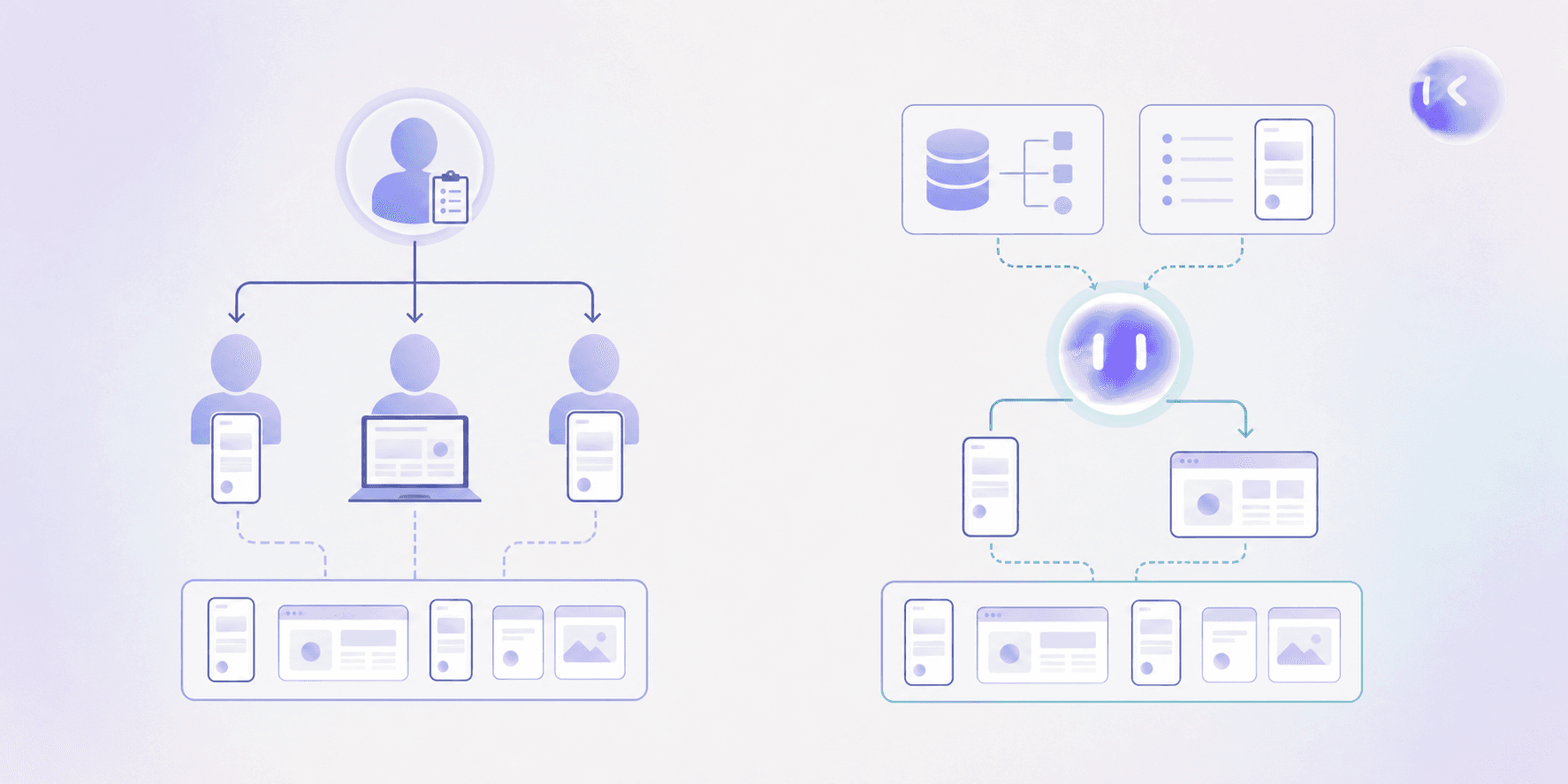
Execution ownership separates Minitap vs Testlio: Testlio coordinates human testers; Minitap runs tests without a tester roster.
Testlio's Human-Led Model
Testlio describes LeoCore as handling tester matching, test-cycle management, and results analysis, with LeoMatch matching vetted testers to the work. Exploratory and usability assessments involve human judgment. Ask Testlio how scope and timing are set for your cycles.
Minitap's Agent-Led Model
Minitap is an AI QA employee that uses specs, tickets, and existing tests to select scenarios, then interacts with the running app on cloud simulators by default, with real devices enabled per workspace.
Trigger full regression for release or pull request validation without tester matching or scheduling, a contrast detailed further in Minitap and BrowserStack. Run videos and written findings arrive with each run, so engineers can inspect execution without a separate reporting handoff.
Regression Speed and Test Maintenance
Test upkeep comes first in the Minitap vs Testlio comparison. Across web and mobile apps, Android TV, and browsers, a changed checkout flow requires coverage updates before the next regression run.
| Maintenance question | Testlio | Minitap |
|---|---|---|
| How does test scope change? | Coordinate updates with Testlio's team as the product changes. | The AI QA employee checks coverage against current product behavior and proposes updates to relevant scenarios. |
| What happens after a UI change? | Scope revisions route through the vendor team. | Tests read the screen, not selectors; the team reviews only the updates Minitap cannot settle, a distinction also covered in Minitap vs Maestro. |
Testlio's cycle time depends on agreed scope and tester availability, as seen across the top mobile QA services compared. Request a turnaround commitment for your actual regression campaign.
Minitap compresses multi-day regression and proposes test updates instead of leaving repairs to your engineers. mini reads Jira for context and files or links tickets from findings, so your team can review results where it already works.
Minitap vs Testlio: Platform Coverage and Workflow Integration
In the Minitap vs Testlio comparison, separate coverage coordination from shared product context.
Testlio's Device and Market Coverage
Testlio uses in-market testers for localization and market-specific validation. Ask how regional expectations, translated content, and device assignments carry between test cycles, a question worth weighing against our guide on managed mobile QA.
Minitap's Coverage From Shared Product Context
Minitap's AI QA employee applies shared expected behavior across web, iOS, Android, and Android TV. Subscription checks account for regional availability, CMS content, and account feature flags.

When blocked, Minitap reports the affected configuration and recommended next action in your team's existing workflow, keeping dependency resolution alongside the finding.
Where Each Fits
The Minitap vs Testlio decision starts with who keeps testing current as the product changes. Testlio's cycle-based human testing model lets teams commission localization checks, payment testing, or exploratory assessments. Minitap takes repetitive regression and testing-cycle coordination off your team, letting you hand Minitap the full regression.
Minitap takes multi-day regression off your team's plate, with diagnosis and recommended next actions.
Our AI QA employee detects disagreements between specifications and actual behavior, a core part of regression testing for mobile apps. It investigates unexpected failures and produces evidence-backed bug reports. For engineering leaders managing regression complexity, that connects testing to the release decision: what failed, why it failed, and what should happen next.