
Release cycles compressed from quarterly to weekly, and your QA process did not keep up. You are running manual regression on features that shipped months ago while new work goes untested until the end of the sprint. Most mobile engineering leaders face the same gap: coverage that once fit in a four-hour checklist now requires dedicated headcount, tooling decisions, and a call on whether to build it, buy it, or hand it to Minitap's fully autonomous QA agent. Below is how each approach compares, and why autonomous agent testing has become the answer for mobile teams in 2026.
TLDR:
- QA prevents defects through process design; testing detects them by running the software.
- Mobile apps fail under OS fragmentation, interrupted networks, and memory pressure.
- Average QA tester salary sits at $89,334 annually; California and Texas pay higher.
- Flaky tests train teams to ignore failures, which is when real bugs slip through.
- Minitap is a fully autonomous QA agent that owns test authorship, execution, maintenance, and root cause analysis so your team ships features without touching the test suite.
What QA and Test Actually Mean in Software Development
QA and testing refer to different things, though most people use them interchangeably. Quality assurance is a preventive discipline focused on the processes and standards that stop defects from forming in the first place. Testing is detective work: you run the software, observe what happens, and record what breaks.
In practice, a QA engineer owns both. They shape how a feature gets built and then verify it behaves correctly once it does.
Why the Distinction Matters for Mobile Teams
Mobile apps fail in ways web apps rarely do: interrupted network states, background process conflicts, memory pressure. The process side of QA, reviewing requirements before a line of code is written, catches ambiguities that would otherwise surface as bugs two sprints later. The testing side confirms the build actually holds up under those conditions.
Treating them as one job description is fine. Treating them as one activity is where coverage gaps form.
Types of QA Testing Every Mobile Team Should Know
Each type of QA testing serves a different purpose, and knowing which one to reach for at what point in your release cycle is where most teams lose time.
Functional Testing
Verifies that features do what they are supposed to do. A checkout flow that completes a purchase, a login that rejects bad credentials, a notification that opens the right screen. If the behavior is wrong, functional testing catches it.
Regression Testing
Confirms that existing functionality still works after a change. Every release carries regression risk, and without a suite covering your stable features, you are shipping blind.
Performance Testing
Measures how the app behaves under load, low memory, and degraded network conditions. A feature that passes functional checks can still produce unresponsive UI or crash when memory runs low after several hours of use.
Exploratory Testing
Unscripted testing where a human works through the app without a predefined test case. Most effective on new or recently changed surfaces where the failure modes are not yet known.
Compatibility Testing
Runs the app under different environment configurations to catch state-specific failures. A layout that displays correctly in one test run can break under different memory or background process conditions.
| Testing Type | What It Verifies | When To Use It |
|---|---|---|
| Functional | Features do what they are supposed to do | Every new feature before it ships; checkout flows, login, notifications |
| Regression | Existing functionality still works after a change | Every release; covers stable features to catch unintended breakage |
| Performance | App behaves correctly under load, low memory, degraded network | High-traffic features; long-running sessions; memory-intensive flows |
| Exploratory | Unscripted human testing to find unknown failure modes | New or recently changed surfaces where failure modes are not yet known |
| Compatibility | App works under different runtime states and environment configurations | Before major releases; when testing new feature interactions with system resources |
The QA Testing Process and How It Fits Into Mobile Development
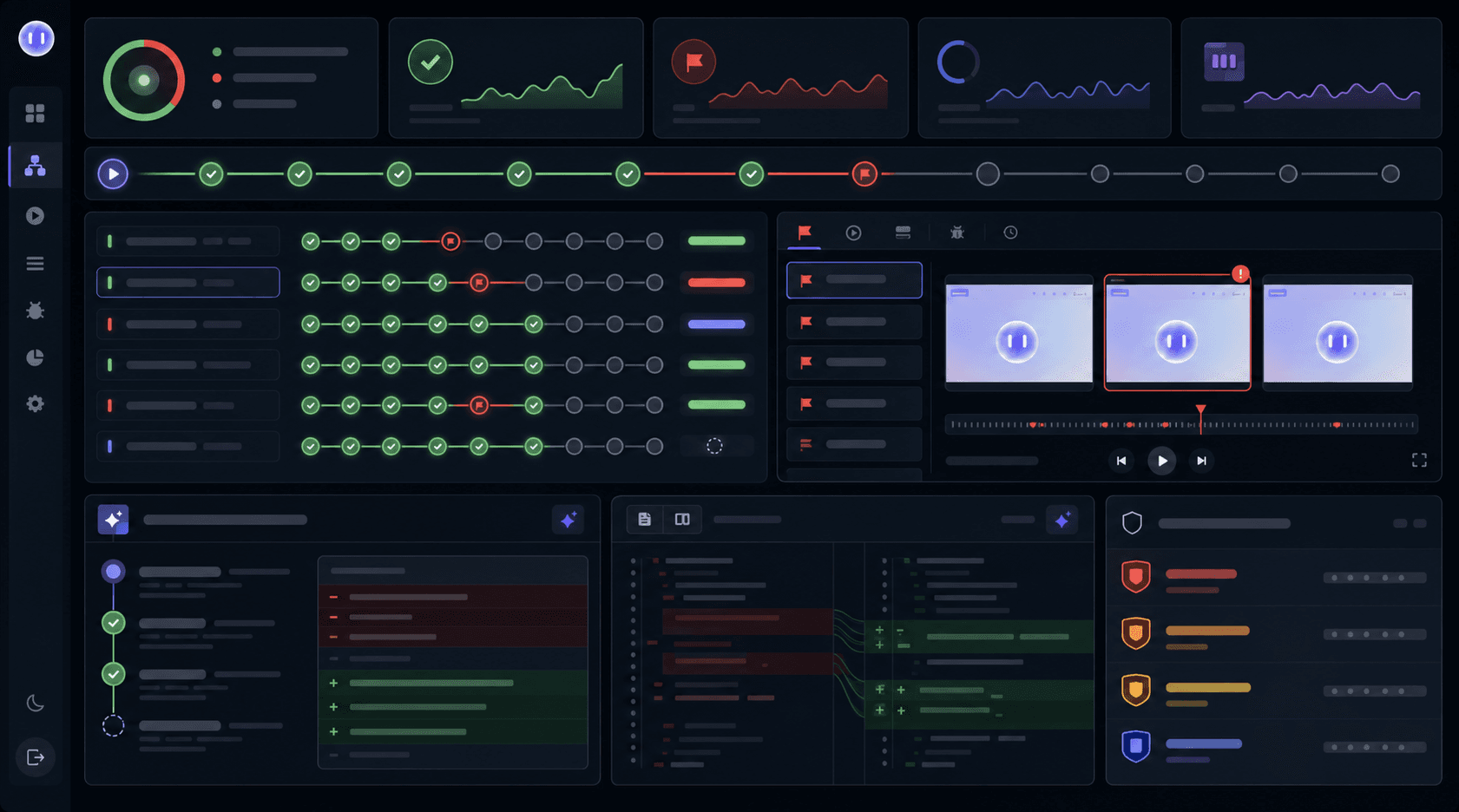
The QA lifecycle runs through six stages: requirement analysis, test planning, test case development, environment setup, execution, and test closure. In Agile and CI/CD workflows, these compress. Requirement analysis folds into sprint planning. Test case development runs parallel to feature work. Execution gates every merge.
App maturity changes which stages carry the most weight. New surfaces need exploratory passes before regression suites get written, because failure modes stay unknown until someone runs the feature in a real environment. Stable flows get automated regression. High-risk paths like payments and authentication get both, every release, regardless of sprint cadence.
Roles and Responsibilities of QA Testers
QA testers sit at the intersection of product quality and release velocity. The role spans several distinct functions depending on seniority, and engineering leaders often underestimate how much that scope varies.
QA Tester Core Responsibilities
A QA tester's core work involves writing and executing test cases, logging defects with enough detail for engineers to reproduce them, and verifying fixes before a build ships. At the junior level, that's most of the job.
QA Tester Seniority Levels and Responsibilities
As seniority increases, the scope grows:
- QA leads own test planning for a release cycle, coordinate coverage across feature teams, and report quality metrics to engineering leadership.
- QA managers set the testing strategy, hire and develop the team, and decide which parts of the suite get automated versus kept manual.
- QA engineers in automation-heavy orgs write and maintain the test infrastructure itself and the tests that run on it.
QA Engineer vs. Test Engineer
The difference between a QA engineer and a test engineer is worth naming directly. A QA engineer owns quality across the full development lifecycle, including process design and defect prevention. A test engineer focuses on executing tests and validating builds. The titles get used interchangeably, but the scope of ownership is different.
Mobile-Specific QA Tester Responsibilities
On mobile, QA testers are also responsible for validating behavior across conditions like low battery, background state, and interrupted network sessions. Those mobile-specific variables don't exist in web QA, and they add meaningful surface area to what the role actually requires.
QA Tester Salary and Compensation Benchmarks
Salaries vary widely depending on location, experience, and specialization. The average QA tester annual salary in the United States sits at $89,334 as of June 2026, which works out to $38.30 per hour nationally.
How Location and Experience Move the Number
California and Texas are two of the highest-demand markets for QA testing jobs, and they pay accordingly. Senior QA testers in California frequently clear six figures, while entry-level QA tester salaries typically start in the $55,000 to $65,000 range depending on the metro. Texas follows a similar curve at slightly lower bands, though Austin and Dallas have narrowed that gap considerably as tech hiring has grown there.
Remote QA testing roles tend to benchmark against the hiring company's headquarters market, so a remote role posted by a San Francisco company often pays closer to California rates than the national average.
QA Testing Certifications Worth Pursuing
Three certifications show up consistently in QA job postings and salary discussions for mobile engineering teams.
The ISTQB Foundation Level is the most recognized entry point. It covers core testing principles, test design techniques, and test management fundamentals that apply across web and mobile contexts. Most hiring managers treat it as a baseline credential for mid-level QA roles.
The ISTQB Mobile Application Testing (MAT) specialist certification goes deeper into mobile-specific concerns: performance testing under network variability, background state handling, and memory management.
For engineers moving toward test automation, the Certified Agile Tester (CAT) and vendor-specific credentials from major cloud infrastructure and testing service providers cover tooling and CI/CD integration that maps directly to what mobile teams are building.
Mobile Testing Challenges That Break Traditional QA Approaches
Script-based automation frameworks depend on selectors. Selectors break when UI elements move, get renamed, or load a frame later than expected. A suite that took months to build can degrade within a single sprint cycle, and the maintenance cost compounds faster than the coverage it was meant to protect.
The structural issues run deeper than selector brittleness. Memory pressure, background processes, and low-storage states create failure conditions that clean test environments may not reproduce under normal conditions.
The Shift From Manual to Automated Testing in 2026
Manual testing still runs most mobile QA in 2026. A senior engineer owns a checklist. The checklist grows with the product. Release cycles slow down, and the engineer becomes the bottleneck.
The shift happening now is structural. Teams are moving test execution out of human hands and into automated pipelines that run on every commit. Coverage that once took four hours of senior IC time now runs in parallel, unattended.
The question facing most mobile engineering leaders is no longer whether to automate, but which approach owns the full loop: script-based tools that still require engineers to write, fix, and maintain tests, or a fully autonomous agent that handles all of it.
QA Testing Best Practices for Mobile Engineering Teams
Risk-based prioritization separates teams that ship confidently from those that find regressions in production. Start by mapping every feature to its release frequency and revenue exposure. Features that touch checkout, authentication, or core navigation earn full regression coverage on every build. Features that shipped unchanged six months ago get smoke-tested, not re-run exhaustively.
Shift-left testing closes the gap between when a bug is written and when it's found. A crash caught during a pull request review costs minutes to fix. The same crash caught after release costs you App Store ratings, uninstalls, and a hotfix sprint.
A few practices that hold up across team sizes:
- Run your smoke suite on every pull request and pre-release builds. Failures found at merge time are cheap. Failures found during release prep are expensive and often political.
- Write regression tests the release after a bug ships, not the release after that. Teams that defer this consistently accumulate coverage debt faster than they can repay it.
- Own your flaky tests. A flaky test that developers learn to ignore is worse than no test. It trains the team to dismiss failures, which is exactly when real bugs slip through.
Common Challenges in QA Testing and How to Resolve Them
Mobile QA breaks in predictable ways. Knowing where the failures cluster helps you fix the right thing first.
Test coverage gaps show up most often in edge cases: low memory states, interrupted network connections, or flows that only trigger after a user has been active for several hours. A test suite that passes in a clean environment can fail silently when the app runs under load or background state transitions.
Flaky tests erode trust fast. When a test fails intermittently without a clear cause, engineers start ignoring the suite entirely, which is worse than having no automation at all.
Keeping tests in sync with a shipping product is the other persistent drag. UI changes, API updates, and new feature flags all break existing tests, and maintenance debt compounds quickly if no one owns it.
Here is where most teams lose ground:
- Test environments that don't simulate mobile-specific conditions like memory pressure, background state transitions, or low-storage states, leading to false passes that only surface after release.
- No clear ownership of QA within the sprint cycle, so testing gets compressed at the end instead of being built in from the start.
- Manual regression runs that grow with the app but never get automated, keeping senior engineers occupied with work that scales poorly.
- Coverage that tracks features instead of user flows, missing the multi-step sequences where most real failures occur.
The teams that stay ahead of these problems treat test maintenance as a first-class engineering task, not a cleanup item between releases.
The State of QA Testing in 2026: Market Growth and Industry Trends
Analyst forecasts put the global software testing market on a path toward $60 billion by 2027, with mobile QA accounting for a growing share of that spend as app complexity outpaces manual testing capacity.
Regulatory pressure around accessibility and data handling is adding mandatory test coverage that didn't exist before 2024, including requirements tied to the EU Accessibility Act that took effect in 2025.
The result is that QA is no longer a phase at the end of a release cycle. It runs in parallel with development, feeds directly into CI/CD pipelines, and in many organizations has moved from a cost center conversation to an engineering quality conversation. Teams that treated QA as a checkbox are now rebuilding their approach after production incidents that cost them App Store ranking, user retention, or both.
How Minitap's Fully Autonomous QA Agent Works for Mobile Engineering Leaders
Minitap is a fully autonomous QA agent: your team does not write tests, fix broken selectors, or triage flaky runs. The agent owns all of it.
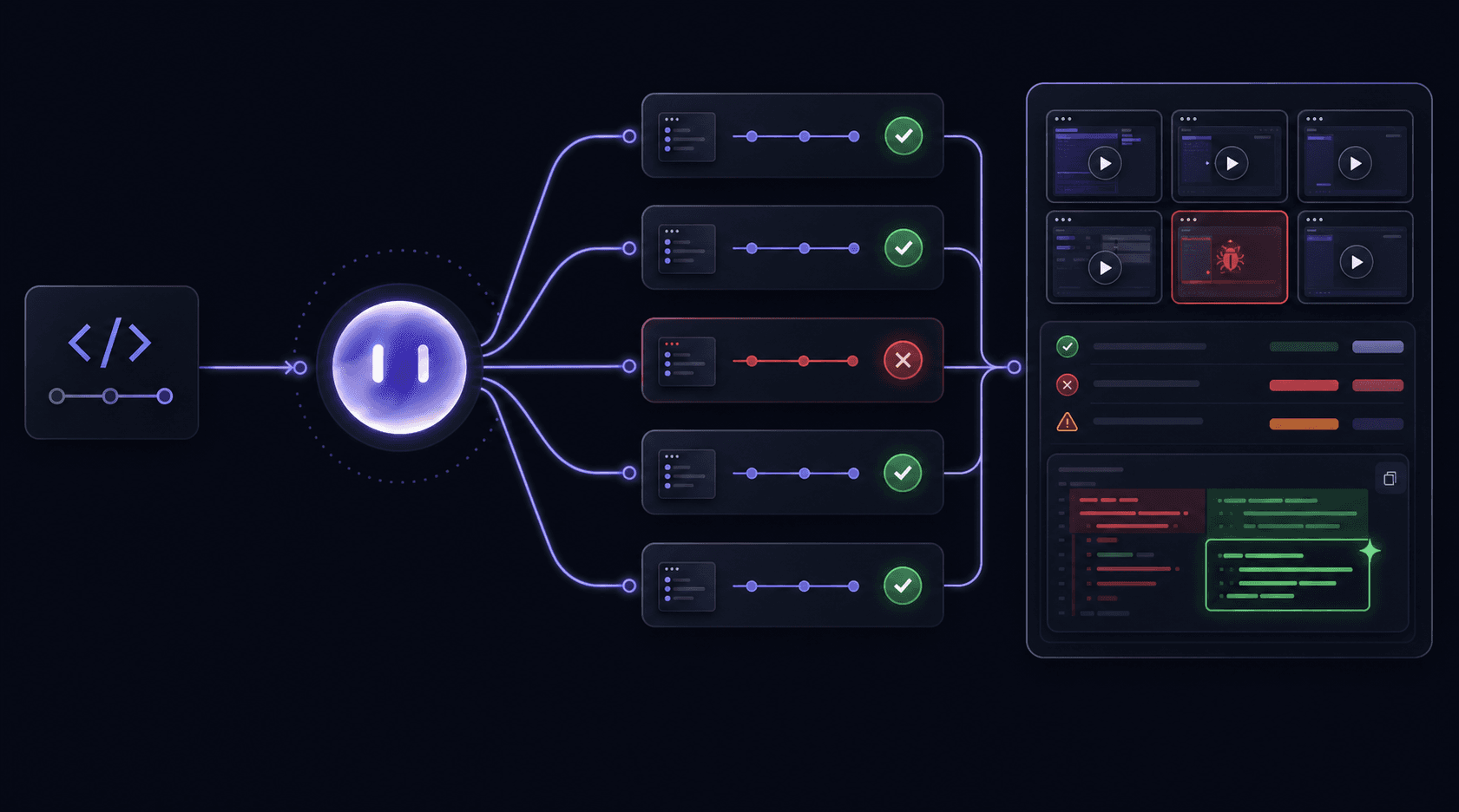
Minitap's agent runs on iOS and Android, executing the full QA loop: test execution, ongoing maintenance, and root cause analysis when failures surface. When your app ships, Minitap runs the suite. When something breaks, Minitap flags it, investigates root cause, and delivers a fix prompt your team can paste directly into Cursor or any AI coding tool.
Every run ships a session recording clipped to the exact moment of failure, a severity assessment, and a fix prompt ready to paste into Cursor. Your team gets full visibility into what broke, where it broke, and how to fix it, without writing, owning, or maintaining a single test.
QA Testing for Mobile Teams: The 2026 Decision
Script-based frameworks require ongoing selector maintenance every time the UI changes. Manual testing scales poorly once release cycles compress. Minitap's fully autonomous QA agent removes test authorship, execution, and maintenance from your team entirely, running coverage across iOS and Android on cloud simulators and emulators so your engineers ship features instead of managing test infrastructure. Connect the codebase, and the QA loop runs itself.
Connect your codebase to Minitap and run your first autonomous regression in about an hour.
Frequently Asked Questions About Mobile QA Testing
What's the actual difference between QA and test in software testing?
QA is preventive process work that stops defects from forming, while testing is detective work that finds bugs in running software. In practice, a QA engineer owns both: they shape how features get built and verify they work once shipped.
Can I hire entry-level QA testers for mobile without testing experience?
It's possible but rarely ideal for mobile-specific roles. Mobile QA requires understanding OS fragmentation, interrupted network states, and background process conflicts that web QA doesn't encounter, making prior mobile testing experience worth paying for.
Manual QA vs automated testing for mobile apps in 2026?
Manual testing still runs most mobile QA, but teams are moving execution into automated pipelines that run on every commit. The deciding question is which flows warrant automation cost versus the risk of shipping them untested: authentication, checkout, and core navigation earn automation first.
What QA test methodologies should mobile teams use first?
Risk-based prioritization separates confident shipping from production regressions. Map every feature to release frequency and revenue exposure: flows touching checkout or authentication get full regression coverage every build, while unchanged features from six months ago get smoke-tested only.
How much does a QA tester salary cost for remote mobile roles?
The average QA tester salary in the United States is $89,334 annually as of June 2026. Remote QA testing roles typically benchmark against the hiring company's headquarters market, so remote positions from San Francisco companies pay closer to California rates than the national average.