
Writing tests after your code already works means you're documenting what the code does, not verifying what users need it to do. Behavior-driven development flips that sequence: you write expected behavior in plain language during sprint planning, before implementation starts, so everyone agrees on what done means before any engineer opens a file. BDD testing frameworks like Cucumber, Behave, and SpecFlow let you turn those plain-language scenarios into executable tests using the Given-When-Then format, and those tests run against every build to catch regressions without manual re-execution.
The problem most teams hit is that BDD scenarios written in Gherkin look simple but scale badly without discipline. Step definitions pile up, scenarios overlap, and nobody owns keeping them synchronized with the actual app after the feature ships. What follows is how behavior-driven development testing works on mobile when you implement it correctly: what BDD is in software testing and automation testing, how BDD vs TDD and ATDD changes your test strategy, which BDD testing tools and frameworks cover mobile-specific conditions like device state and gestures, and where teams lose time when they skip discovery workshops and treat scenario authorship as a post-implementation formality.
TLDR:
- BDD writes test scenarios in plain language using Given-When-Then format before code exists, so QA, product, and engineering align on expected behavior upfront.
- Gherkin specs read like documentation anyone can verify, but teams accumulate redundant step definitions, overlapping scenarios, and stale specs as scenario libraries grow without discipline.
- BDD adoption stalls when non-technical stakeholders disengage from scenario writing, leaving engineers to do it alone and losing the cross-functional alignment BDD was built for.
- Most teams need three to six months to reach proficiency, assuming consistent commitment across engineering, QA, and product.
- Minitap executes natural language test descriptions directly against iOS and Android apps on cloud iOS simulators and Android emulators, covering AI-driven features, memory pressure, and stateful flows without Gherkin files or selector maintenance.
What Is Behavior-Driven Development Testing?
Behavior-driven development testing is a software testing approach that ties test scenarios directly to business requirements, written in plain language that both engineers and non-technical stakeholders can read. Where traditional test specs live inside codebases that only developers can interpret, BDD specs read like documentation anyone on the team can verify against actual product behavior.
The core mechanic is the Given-When-Then format, which structures every scenario as a precondition, an action, and an expected outcome. A mobile checkout flow, for example, might read: given a user has items in their cart, when they tap "Pay Now," then the order confirmation screen appears. That scenario becomes an executable test.
BDD sits at the intersection of requirements gathering and test automation, which is where most mobile teams lose time: requirements drift, tests lag behind, and nobody can tell which failures reflect bugs versus outdated specs.
The Three Core Practices of BDD
Three practices hold BDD together as a working methodology, and each one builds on the last.
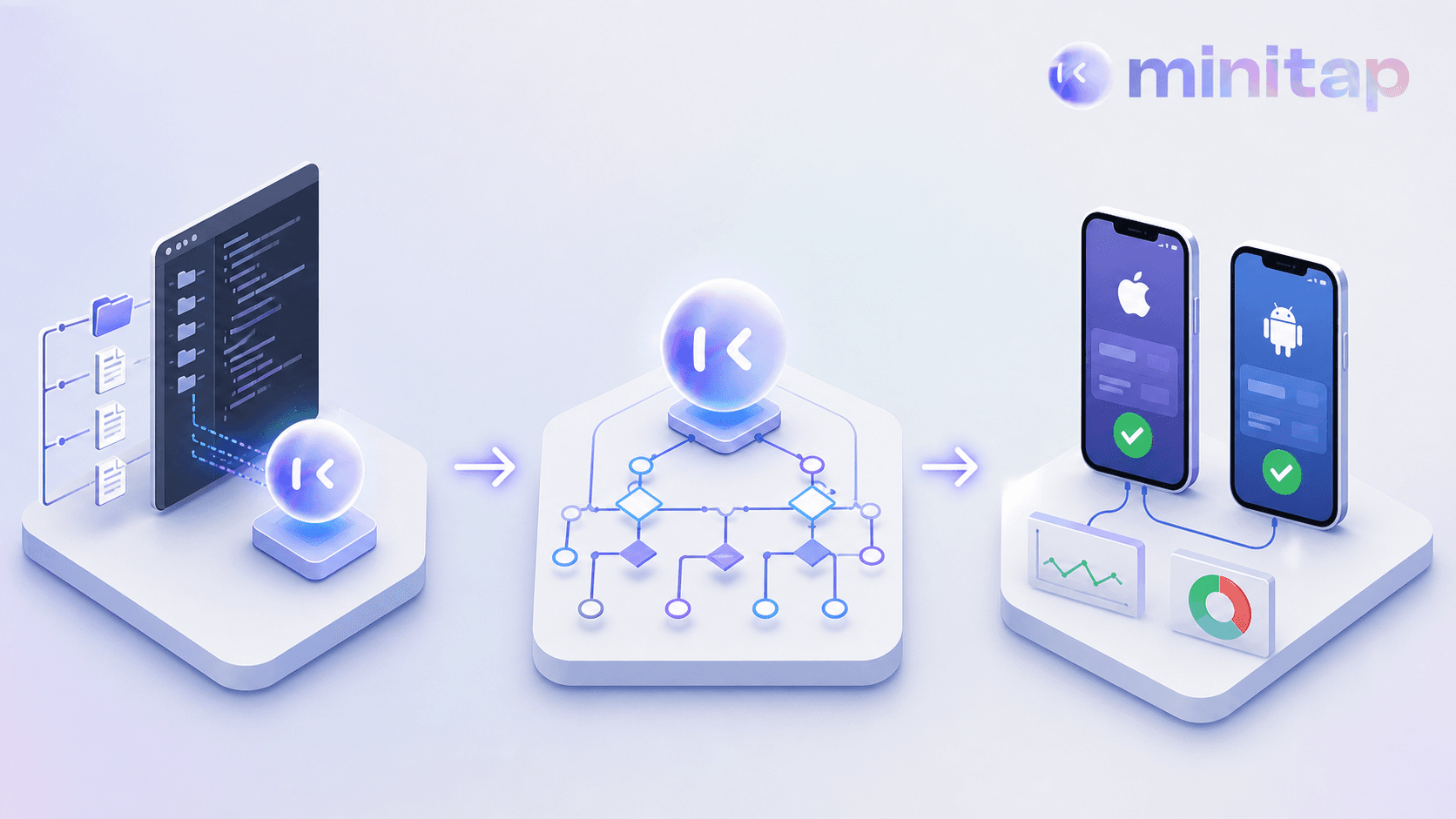
Discovery Workshops
Before any code gets written, developers, QA engineers, and product stakeholders sit down to work through how a feature should behave. The goal is to surface disagreements early, when fixing them costs nothing. Teams typically use structured conversation formats like Example Mapping to produce concrete scenarios that everyone agrees on.
Formulation
Those agreed scenarios get written in Gherkin, a structured natural language format using Given/When/Then syntax. This step produces the living documentation that doubles as test input.
Automation
Gherkin scenarios are wired to executable test code using a BDD framework like Cucumber. When the scenario runs, it either passes or fails against the actual implementation, making the spec verifiable instead of decorative.
Understanding Gherkin: The Language of BDD
Gherkin is the structured syntax that turns business conversations into automation input. Every file starts with a Feature keyword naming the capability being tested, followed by Scenario blocks, each representing one behavior worth verifying.
Inside each scenario, the keywords do what they say:
Givensets the starting stateWhendescribes the user actionThenasserts the expected resultAndextends any step without repeating the same keywordButhandles negative extensions ("But the cart total should not change")
A mobile login scenario looks like this:
A framework like Cucumber reads each line and maps it to a step definition written in actual code. The Gherkin file stays human-readable; the implementation lives separately. A product owner can open that file and verify whether the spec matches what the feature is supposed to do, without touching a single line of test code.
BDD vs TDD vs ATDD: Understanding the Differences
All three methodologies start with a test before writing production code. What differs is who writes them, at what level, and what question each one answers.
| TDD | BDD | ATDD | |
|---|---|---|---|
| Primary question | Does this unit work? | Does this feature behave correctly? | Does this meet customer requirements? |
| Written by | Developers alone | Developers, QA, and product together | Customers, QA, and developers together |
| Language | Code | Gherkin (natural language) | Acceptance criteria or natural language |
| Scope | Unit level | Feature level | System level |
| Output | Unit tests | Executable scenarios | Acceptance tests |
In practice, these approaches layer well together on a mobile project. TDD keeps individual functions sound at the unit level. BDD covers feature behavior across multiple components, written in a format the whole team can read. ATDD locks in the customer-facing acceptance bar before sprint work begins, so engineers know what "done" actually means. Many mobile teams run a version of all three without coordinating them explicitly, since each one catches failures the others miss.
How BDD Works for Mobile Application Testing
BDD scenarios map directly onto how mobile apps are actually used. A scenario like "Given the user is on the checkout screen, When they tap Place Order, Then the order confirmation screen appears" reads the same way to a product manager reviewing acceptance criteria and to a test runner executing it against a build.
For mobile engineering teams, this matters because mobile apps are interaction-heavy. Flows involve gestures, transitions, device state, and network conditions that present mobile application testing challenges hard to capture in unit tests alone. BDD scenarios cover those flows end-to-end, written in plain language before a single line of implementation exists.
Where BDD Fits in the Mobile Release Cycle
BDD scenarios are written during sprint planning, before implementation starts. That timing matters. Scenarios written after code is already working tend to describe what the code does, not what users need it to do.
- Scenarios written upfront act as acceptance criteria, so there is no ambiguity about what "done" means when a feature ships.
- QA, product, and engineering align on expected behavior before any code is written, catching requirement gaps early.
- Automated test suites built from those scenarios can run against every build on device coverage breadth, giving the team a consistent regression signal across iOS and Android without manual re-execution.
Popular BDD Testing Frameworks and Tools
The BDD ecosystem has matured into a set of proven tools, each built around the same core idea: write specs in plain language, then wire them to executable test code.
Cucumber-Based Frameworks
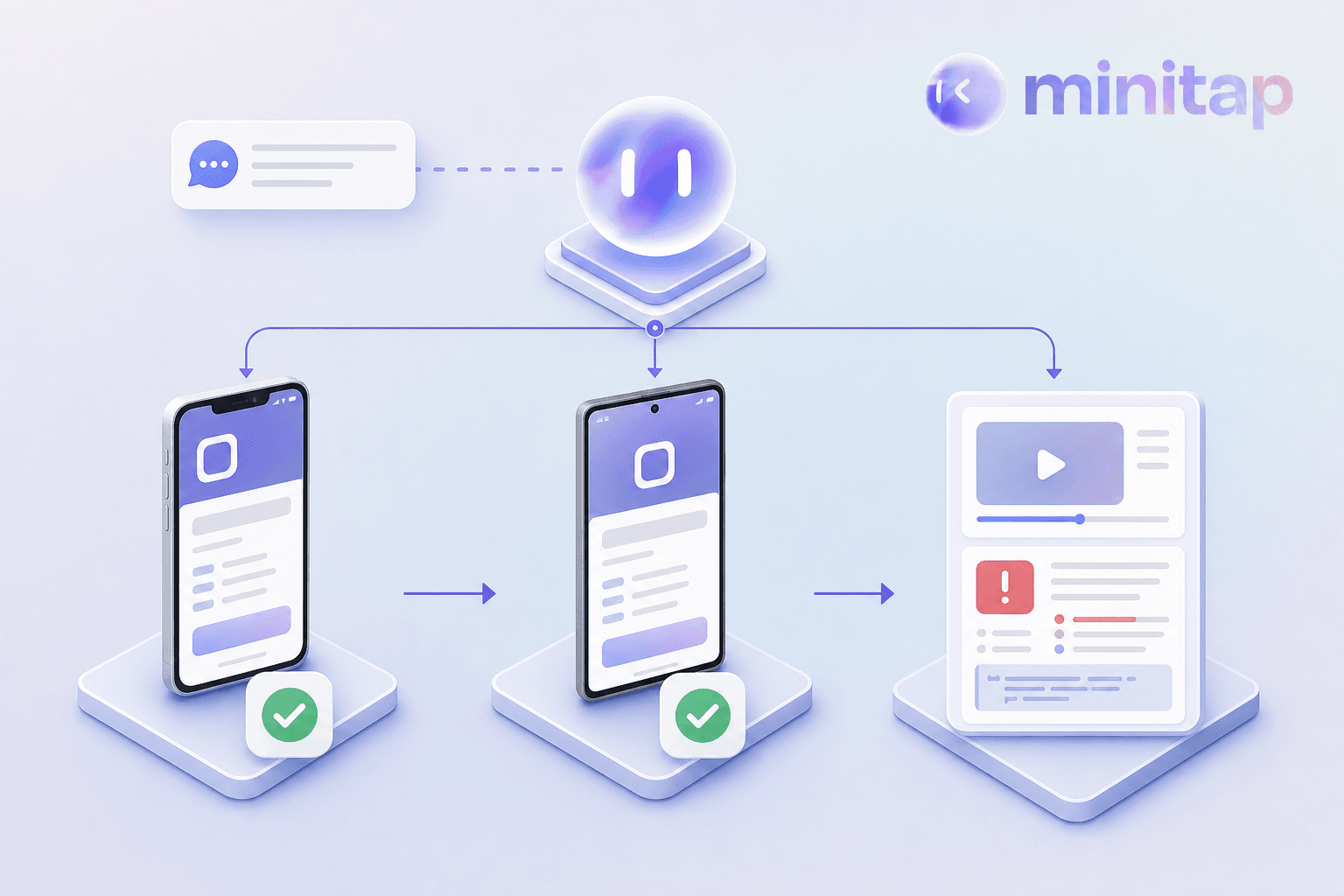
Cucumber remains the most widely adopted BDD framework across Java, Ruby, and JavaScript projects. It parses Gherkin syntax directly, mapping each Given/When/Then step to a corresponding step definition in your test code. Teams running Java backends often pair it with Selenium or Appium for UI coverage.
Python and Mobile-Friendly Options
- Behave is the standard BDD framework for Python teams, following the same Gherkin conventions as Cucumber without the JVM dependency. Teams seeking to reduce scripting overhead can consider Appium alternatives with no-script testing.
- Pytest-BDD integrates BDD scenarios into existing pytest suites, making adoption easier for teams with existing Python test infrastructure.
- Appium with Cucumber covers native mobile flows on both iOS and Android, letting QA write scenario steps that drive native UI interactions. Teams weighing their options can review mobile application testing frameworks to compare different approaches.
Quick Reference: Framework by Stack
| Framework | Language | Best Fit |
|---|---|---|
| Cucumber | Java, Ruby, JS | Backend and web UI |
| Behave | Python | Python service teams |
| Pytest-BDD | Python | Teams already using pytest |
| SpecFlow | C# | .NET engineering orgs |
| Appium + Cucumber | Java/JS | Native mobile automation |
Free tiers exist across most of these tools, and Gherkin remains the shared syntax layer regardless of which runner you choose.
Writing Effective BDD Scenarios: Best Practices
The biggest mistake teams make is describing how code works instead of what users experience. "When the API returns a 200 status" is an implementation detail. "When the user taps Sign In and the home screen loads" is a behavior. That distinction determines whether your scenario suite stays useful six months from now.
Cucumber's official BDD documentation lays out the three-step iterative process: take a small upcoming change, write scenarios collaboratively, and automate them before implementation begins. A few principles hold across projects:
- One behavior per scenario. Multiple assertions make failures hard to diagnose when a scenario breaks.
- Steps should be reusable. "Given the user is logged in" beats rewriting the same authentication setup across every feature file.
- Use
Examplestables when the same flow needs testing across several data variations. One scenario outline with five rows replaces five separate scenarios. - Keep assertions at the UI level. Scenarios that reach into database state break whenever the underlying implementation changes, similar to how flaky mobile UI tests fail inconsistently.
Common Challenges in Implementing BDD
In practice, BDD adoption rarely fails on the technical side. It stalls on the organizational side: product managers stop writing scenarios as sprint pressure builds, engineers absorb all the authorship, and the cross-functional alignment BDD was designed to create disappears. Teams that underestimate that gap tend to abandon it before they see results.
The most common friction point is getting non-technical stakeholders to engage with scenario writing consistently. Product managers and business analysts may contribute heavily during discovery workshops at first, then quietly disengage as sprint pressure builds. When that happens, engineers end up writing all the scenarios themselves, and the cross-functional alignment BDD was supposed to create disappears.
A few challenges surface across nearly every adoption:
- Gherkin looks simple but scales badly without discipline. As projects grow, teams accumulate redundant steps, inconsistent phrasing, and scenarios that overlap without anyone noticing until the suite becomes hard to maintain.
- Mapping step definitions to automation code requires ongoing investment. Each new Gherkin phrase needs a corresponding code implementation, and that overhead compounds as the scenario library grows.
- Scenario drift happens when specs written before a feature shipped go stale after the feature changes, and nobody has a clear owner for keeping them current.
Most teams need three to six months to reach proficiency, depending on team size and existing processes. That timeline assumes consistent commitment across engineering, QA, and product, which is harder to maintain than it sounds when competing priorities are pulling each group in different directions.
BDD Testing for Mobile Engineering Teams: How Minitap Delivers Pre-Emptive Coverage
BDD gives teams a shared vocabulary for specifying behavior. The maintenance work that follows, keeping step definitions synchronized with a growing scenario library, stays entirely on your team.
Minitap takes the natural language layer and skips the scripting layer entirely through automated mobile testing with AI agents. The agent owns the full QA loop: authorship, execution, maintenance, and root cause analysis. It reads your codebase directly, maps every testable flow automatically, and executes against your iOS and Android apps, with no flow descriptions required and engineers never touching QA again. No Gherkin files to maintain, no selectors to fix when the UI updates after a redesign with mobile test automation without scripts.
The agent covers flows that script-based BDD suites structurally cannot reach: AI-driven features in your product that produce non-deterministic output, runtime conditions like interrupted sessions and permission changes, and stateful flows requiring specific app conditions that selectors were never built to handle. When something fails, the agent handles root cause analysis and delivers video recordings with fix prompts directly to your team. Bugs that would otherwise require a manual smoke pass surface automatically with every build, and your engineers own none of the investigation work.
Final Thoughts on BDD Testing in Practice
BDD succeeds when it closes the gap between what stakeholders expect and what engineers build, which happens during scenario writing, not test execution. The friction comes later: keeping Gherkin files synchronized with a changing product while maintaining the code that makes those scenarios executable. Minitap reads your app from source, maps every testable flow, and runs the full regression suite on cloud iOS simulators and Android emulators. No Gherkin files, no step definitions, and no maintenance landing on your team. Connect the codebase and the QA loop runs itself.
FAQ
What is BDD in mobile testing?
BDD is a testing approach that ties test scenarios to business requirements using plain language that engineers and non-technical stakeholders can both read. Tests are written in Given-When-Then format before implementation starts, serving as executable acceptance criteria that run against every build.
BDD vs TDD vs ATDD: which one should my team use?
They layer together instead of replacing each other. TDD keeps unit-level functions sound, BDD covers feature behavior across components in plain language, and ATDD locks in customer-facing acceptance criteria before sprint work begins. Most mobile teams run some version of all three since each catches failures the others miss.
Can I implement BDD without writing step definitions for every scenario?
Not with traditional BDD frameworks like Cucumber or Behave, where every Gherkin phrase needs a corresponding code implementation. That mapping overhead compounds as your scenario library grows. Autonomous agents like Minitap skip the step definition layer entirely, executing natural language specs directly against iOS and Android builds without scripting.
What are the most common failure points when adopting BDD?
Product managers and business analysts stop contributing to scenario writing once sprint pressure builds, leaving engineers to write all specs themselves. When that happens, the cross-functional alignment BDD was supposed to create disappears, and you end up with a test suite written in Gherkin syntax without any actual collaboration benefit. Minitap removes the authorship problem at the root: the agent reads your app from source and maps test flows automatically, so coverage does not depend on cross-functional scenario writing at all.
How long does it take mobile teams to reach proficiency with BDD?
Three to six months on average, assuming consistent commitment across engineering, QA, and product. That timeline breaks down when competing priorities pull each group in different directions, which is harder to maintain than most teams expect when they start adoption. Minitap skips that ramp entirely: the agent reads your app from source, maps test scenarios automatically, and runs coverage without your team writing a single Gherkin file or running cross-functional discovery workshops.