
Momentic and Minitap now cover the same ground: web, iOS and Android apps tested by an AI agent. Momentic's agent, Mo, explores your app, files bugs, and turns approved flows into Momentic tests that run in CI. Minitap's agent, mini, works as an AI QA employee focused on compressing multi-day regression. The difference is less about platforms than about what you want the agent to produce and who keeps the suite. This guide compares both as of November 2026, using Momentic's own site for its facts.
TLDR:
- Momentic describes Mo as an AI QA engineer for web, iOS and Android apps. iOS and Android testing are generally available.
- Mo files bugs with repro steps and recordings, and turns a flow you approve into a Momentic YAML test opened as a pull request.
- Momentic runs saved tests on every PR, nightly or in CI, on hosted browsers, iOS simulators and Android emulators, with self-healing AI actions.
- Minitap's mini writes regression scenarios with acceptance criteria from specs, tickets, docs and existing test cases, runs them as black-box visual tests, and proposes updates for review.
- Momentic fits teams that want agent-written tests living in their repo; Minitap fits teams whose bottleneck is multi-day regression across configurations.
What Is Momentic?
Momentic presents Mo as an AI QA engineer for web, iOS and Android apps. You point Mo at a URL or a build and say what to test; Mo picks the flows, runs them, and files each bug with repro steps, expected and actual behavior, and a screenshot or recording.
When you approve a flow, Mo turns it into a Momentic YAML test and opens a pull request in your repository. Momentic then runs saved tests on a schedule, on every PR or in CI, and the result can be used as a required check. Tests run on hosted browsers, iOS simulators and Android emulators, or in your own CI.
Momentic's changelog lists iOS and Android testing as generally available, with screen recordings for every mobile run. It also lists self-healing AI actions that plan a flow, cache resolved steps and heal on failure, a triage agent that groups failures and proposes fixes, and a free tier to start.
What Is Minitap?
Minitap is an AI QA employee. Its agent, mini, builds an understanding of your product from the context your team provides, such as product specs, tickets, documentation and existing test cases uploaded as CSV or Excel. From that, mini writes test scenarios with acceptance criteria that anyone can edit in plain words.
mini runs those scenarios as black-box visual tests on web apps, iOS and Android apps, and Android TV where enabled. When the app changes, mini proposes updates to its tests and asks your team to review only the changes it cannot settle on its own. Each run comes with a video and findings. When a run is blocked, mini explains why and recommends the next action.
Platform Coverage: Web, iOS and Android on Both Sides
The old framing that Momentic is a web-only tool is wrong today. Both products test web, iOS and Android. Minitap also covers Android TV where enabled for the workspace.

The practical question is how each handles the same journey across platforms and configurations. Momentic stores each journey as a test file in your repo. Minitap stores it as a scenario with acceptance criteria and runs the same scenario across web and mobile, and across the environments, geographies, CMS content and feature flag combinations that change what "correct" means for a release. On web, mini can set feature flags or session state with cookies and local storage.
Test Ownership and Maintenance
Momentic puts tests in your repository as YAML. That gives engineers version control, review in pull requests and portability. Maintenance is assisted: AI actions self-heal at run time, and the triage agent commits fixes your branch caused and opens pull requests for other causes. Someone on your team still reviews those changes and owns the suite.
Minitap keeps scenarios, not scripts. mini writes and maintains them; when the app changes, it proposes updates and asks for review only on what it cannot settle. If a finding is not a bug, the team marks it "Not a bug" with a short reason, and mini takes that into account on the next run.
Workflow Fit
Momentic is built around the pull request and the coding agent: start Mo from a PR comment, a label or the CLI, test a preview deployment, and get a review and a commit check. That fits teams who want QA inside their development loop.
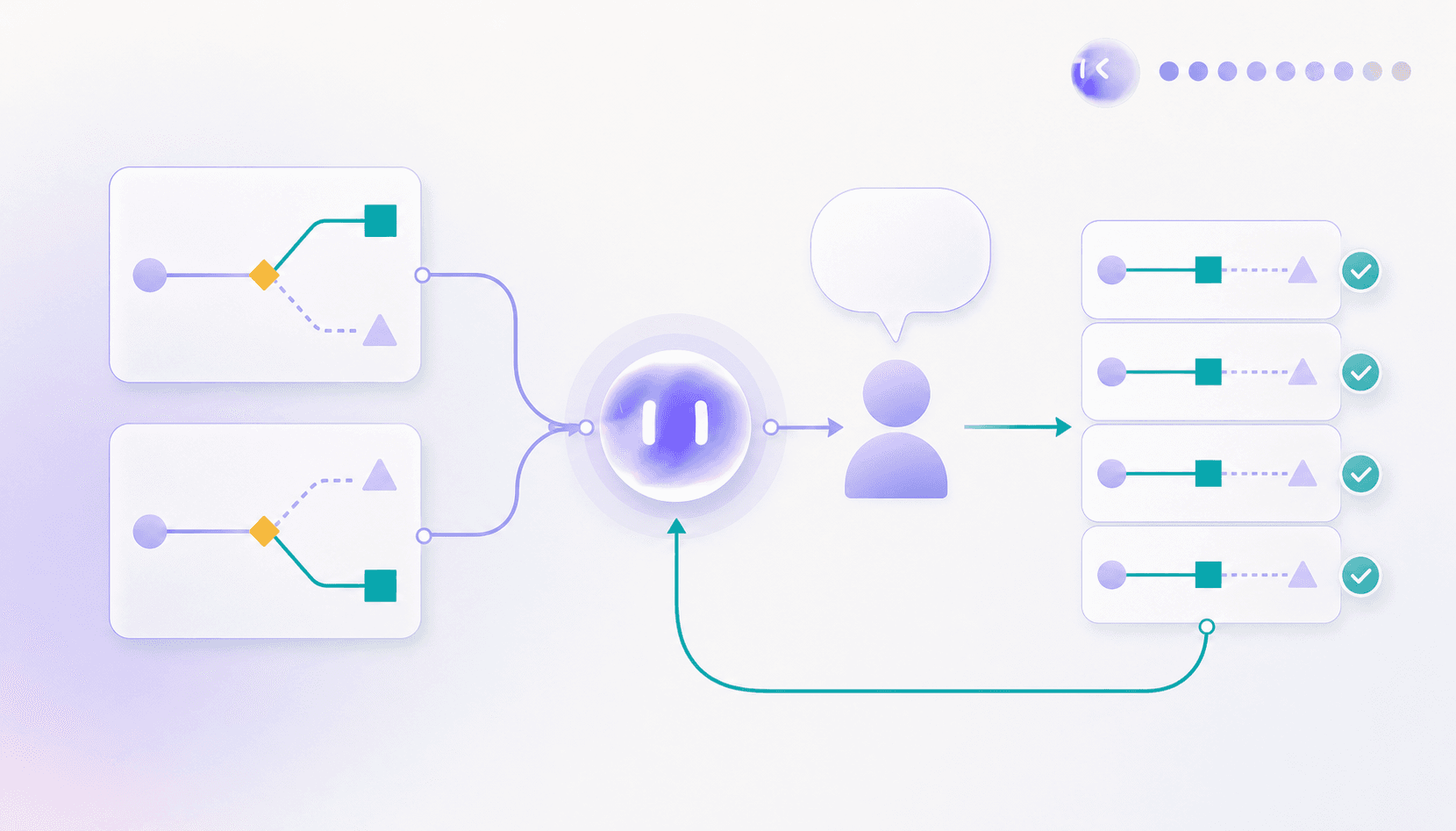
Minitap is built around the regression campaign. Its primary job is compressing multi-day regression before a release, with PR testing as a secondary use. On GitHub, mini posts one comment on pull requests into the app's default or release branches and keeps it updated, posts a check named Minitest (App), and starts a run when someone ticks Run affected or comments @mini test.
Minitap vs Momentic at a Glance
| Dimension | Momentic | Minitap |
|---|---|---|
| Platforms | Web, iOS, Android | Web, iOS, Android, plus Android TV where enabled |
| Agent | Mo explores, files bugs, turns approved flows into tests | mini writes and runs regression scenarios from product context |
| Test format | Momentic YAML tests in your repo, opened as PRs | Scenarios with acceptance criteria, editable in plain words |
| Maintenance | Self-healing AI actions and a triage agent that proposes fixes | mini proposes test updates; the team reviews what it cannot settle |
| Evidence | Repro steps, screenshot or recording per bug; mobile run recordings | Video and findings per run; blockers come with a recommended next action |
| Main fit | PR and CI verification inside the dev loop | Multi-day regression across configurations |